
Category: Uncategorized

  • 7 Best Alpha Hydroxy Acid Products for Dull, Rough, and Uneven Skin

    7 Best Alpha Hydroxy Acid Products for Dull, Rough, and Uneven Skin

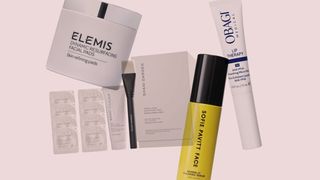
    Image contains a collage of silos of the best alpha hydroxy acid products on an offwhite backgroundCollage: Jemeria Davison; Source images: Courtesy of brandsSave StorySave this storySave StorySave this story

    If your skin's looking a little dull or feeling rough, the best alpha hydroxy acid products might be exactly what your routine is missing. Also known as AHAs, these chemical exfoliants loosen the bonds that hold dead cells together, making way for smoother, brighter, and more even-looking skin.

    But before you grab the first AHA you see, know that they don't all work the same way—and they’re not always right for everyone. Glycolic acid is known for its ability to tackle uneven texture and fine lines, while lactic acid exfoliates but “also has hydrating properties, so it tends to be more tolerable for dry or sensitive skin,” Mamina Turegano, MD, a board-certified dermatologist based in New Orleans, previously told Allure. Mandelic acid, meanwhile, has a larger molecular size, making it an even gentler option for easily irritated skin. And you don't have to commit to an intense chemical peel to reap the benefits. AHAs show up in everything from cleansers and toners to serums, pre-soaked pads, and even body lotions.

    Our Top Alpha Hydroxy Products

    • Best Cleanser: SkinMedica AHA BHA Exfoliating Cleanser, $48
    • Best Facial Pads: Elemis Dynamic Resurfacing Facial Pads, $69
    • Best Face Mask: Shani Darden Triple Acid Signature Peel, $125
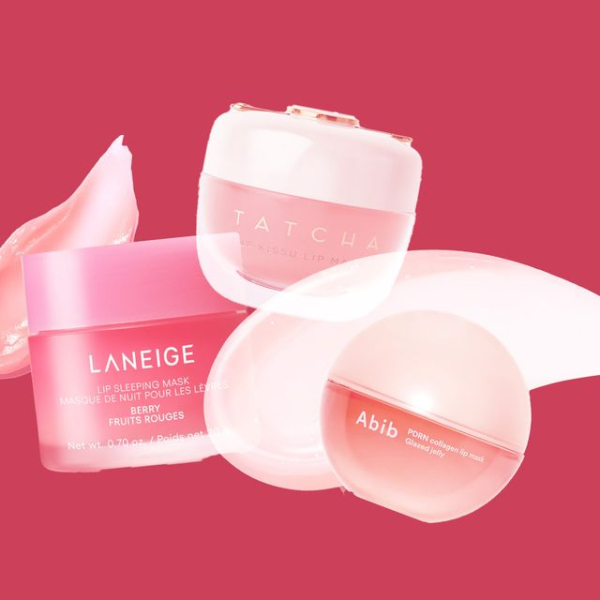
    • Best Lip Treatment: Obagi Lip Therapy AHA+PHA Smoothing Micro-Peel, $55

    Frequently Asked QuestionsAccordionItemContainerButtonLargeChevron

    • What are alpha hydroxy acids?
    • Can you use AHAs with retinol?
    • Who shouldn’t use AHAs?
    • Meet the experts
    • How we test and review products
    • Our staff and testers

    Of course, more exfoliation isn't always better (your skin barrier would like a word). We tapped board-certified dermatologists and Allure editors to narrow down the formulas worth adding to your routine.

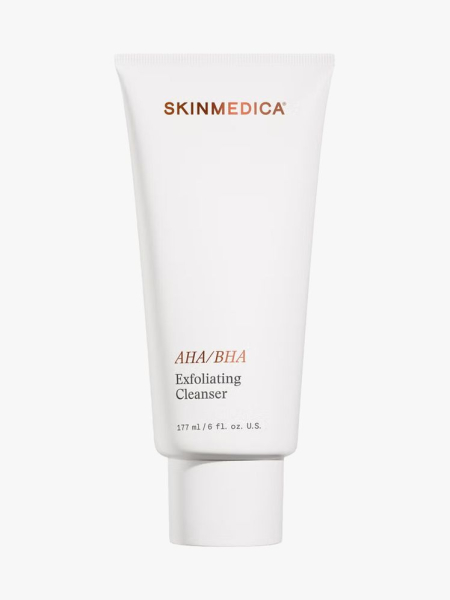
    Best Cleanser: SkinMedica AHA BHA Exfoliating Cleanser
    SkinMedica AHA/BHA Exfoliating Cleanser in branded tube component on a light gray backgroundSave to wishlistSave to wishlist

    SkinMedica

    AHA BHA Exfoliating Cleanser

    $48

    Amazon

    $48

    Nordstrom

    $48

    Dermstore

    Allure contributing commerce editor Deanna Pai applying SkinMedica’s AHA + BHA Exfoliating Cleanser

    Deanna Pai

    Why it’s worth it: When a cleanser has won over multiple Allure staffers—including our editor in chief—and earned the approval of multiple dermatologists we spoke with, you know it's doing something right. SkinMedica’s AHA/BHA Exfoliating Cleanser is a go-to for oily, breakout-prone, and dull skin, thanks to its combination of three different exfoliating methods. A blend of AHAs (including glycolic, lactic, citric, and malic acids) loosens dead surface cells and smooth uneven texture, while salicylic acid (a beta hydroxy acid) gets into pores to clear out excess oil and buildup. Soft jojoba spheres also provide a little physical exfoliation without the harsh scratchiness of traditional scrubs. “This is one I recommend regularly in practice and genuinely love because it does a lot without being aggressive,” says Alexandra Bowles, DO, a board-certified dermatologist based in Cincinnati. “It lathers nicely, rinses clean, and doesn't leave the skin feeling stripped or tight afterward.”

    Tester feedback from contributing commerce editor Deanna Pai

    AccordionItemContainerButtonLargeChevron

    "This exfoliating cleanser does the impossible: It leaves my skin super-soft and smooth, even when I'm dealing with hormonal breakouts, but never feeling squeaky-clean or overly tight. That's a big deal, considering the potent ingredients in its lineup. Plus, the combo of AHAs and BHA targets my two primary concerns, hyperpigmentation and acne, respectively." —Deanna Pai, contributing commerce editor

    More to know

    AccordionItemContainerButtonLargeChevron

    • Key AHAs: glycolic, lactic, citric, and malic acids
    • Other ingredients: salicylic acid, jojoba beads
    • Fragrance-free: yes

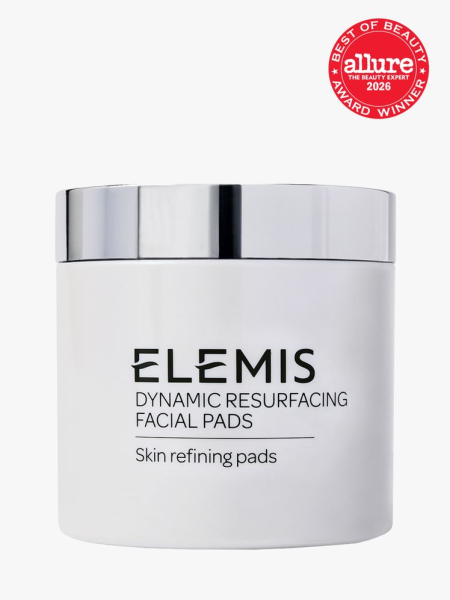
    Best Facial Pads: Elemis Dynamic Resurfacing Facial Pads
    Elemis Dynamic Resurfacing Facial Pads in branded tub component on a light gray background with the 2026 best of beauty seal in the top right cornerSave to wishlistSave to wishlist

    Elemis

    Dynamic Resurfacing Facial Pads

    $69

    Amazon

    Allure managing editor Alessandra Foresto applying the Elemis Dynamic Resurfacing Facial Pads

    Alessandra Foresto

    Why it's worth it: You might need to wait weeks to start seeing results from most skin-care products, but a few swipes of Elemis’ Dynamic Resurfacing Facial Pads deliver an immediate glow that looks like you've been putting in the work for months. The 2026 Best of Beauty Award winner combines gentle lactic acid with the brand's Tri-Enzyme Technology (papain, protease, subtilisin) to dissolve dead skin cells without disrupting the moisture barrier. A probiotic ferment complex (Lactococcus ferment lysate) also supports skin renewal, improving rough texture and the appearance of dark spots over time, so there are longer-term perks, too. It might look like an unassuming cotton pad, but it's got a lot more going for it than meets the eye.

    Tester feedback from managing editor Alessandra Foresto

    AccordionItemContainerButtonLargeChevron

    “I'm new to using exfoliating pads, but lately my eczema breakouts are leaving hyperpigmentation behind almost immediately, and I need a little more regular exfoliation. I tried a few different exfoliating toners but didn't see a significant change until I started using these. My facialist commented on how much better my dark spots looked after a month of use. They don't sting, smell strongly, or leave my face feeling dry.” —Alessandra Foresto, managing editor

    More to know

    AccordionItemContainerButtonLargeChevron

    • Key AHA: lactic acid
    • Other ingredients: Tri-Enzyme Technology (papain, protease, subtilisin), probiotic ferment complex (Lactococcus ferment lysate)
    • Fragrance-free: no

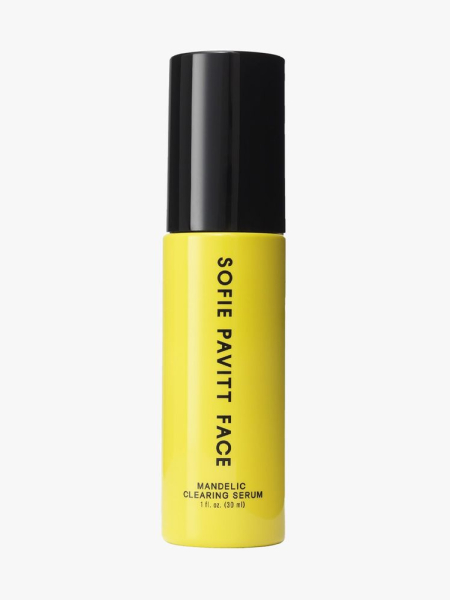
    Best Serum: Sofie Pavitt Face Mandelic Clearing Serum
    Sofie Pavitt Face Mandelic Clearing Serum in branded component on a light gray backgroundSave to wishlistSave to wishlist

    Sofie Pavitt Face

    Mandelic Clearing Serum

    $54

    Shop

    $54

    Sephora

    Why it's worth it: They don't call Sofie Pavitt the “acne whisperer” for nothing. The New York City-based esthetician has made a name for herself treating breakout-prone skin, so naturally, her namesake line has a thing or two to offer anyone dealing with clogged pores. Case in point: The Face Mandelic Clearing Serum, which uses 8% mandelic acid to slough away dead skin cells, smooth uneven texture, and help prevent the buildup that can lead to breakouts. What sets it apart from other AHAs, like glycolic acid, is its larger molecular size, which means that it penetrates skin more slowly and therefore tends to be gentler. And because acne-prone skin still needs moisture, the formula pairs two forms of hyaluronic acid with soothing panthenol to replenish hydration and prevent irritation.

    Allure commerce market editor Sarah Hoffmann applying the Sofie Pavitt Face Mandelic Clearing Serum

    Sarah Hoffmann

    Allure commerce editor Sarah Han applying the Sofie Pavitt Face Mandelic Clearing Serum

    Sarah Han

    Tester feedback from commerce market editor Sarah Hoffmann

    AccordionItemContainerButtonLargeChevron

    "I used to be a splash of cold water, SPF, and go type of morning skin care person, but this serum made me completely change my tune. The difference it makes in how my skin looks throughout the day (and how my makeup wears) is astounding. My skin is prone to looking either very oily or very dull about eight hours into the day—how'd I get both issues? Just lucky I guess—and I give this serum total credit for keeping my skin looking actually nice after a long day of commuting in NYC's less-than-perfect air, sitting in a high-rise office for eight hours, then getting up to who knows what after work. I feel like I can see the antioxidant protection in action when I use this. It keeps my skin looking like I freshly applied my skin care, which is such a feat." —Sarah Hoffman, commerce market editor

    Tester feedback from commerce editor Sarah Han

    AccordionItemContainerButtonLargeChevron

    “I recently got a facial with the one and only Sofie Pavitt and got my hands on this serum, which I've heard raving reviews about but hadn't yet tried. I know! But, to be fair, I wasn't sure if it was the best fit for me. I rarely get breakouts, but I have been keen to incorporate more acids into my daily rotation. (I can't be trusted to mask every week—though I am very excited to try the brand's latest launch: a hot and cold mask duo when my skin needs a deep reset!) Mandelic acid is already known to be gentle, so we love that, and this serum also packs hyaluronic acid and panthenol for extra hydrating and calming benefits. Overall, I really appreciate how relatively simple the ingredients list is—no filler ingredients—and I find that my complexion is looking brighter and more even as time goes on! I use this every a.m., and it's so lightweight (almost watery) that I can barely feel it once it's sunk in.” —Sarah Han, commerce editor

    More to know

    AccordionItemContainerButtonLargeChevron

    • Key AHAs: 8% mandelic acid
    • Other ingredients: hyaluronic acid, hydrolyzed sodium hyaluronate, panthenol (vitamin B5), glycerin
    • Fragrance-free: yes

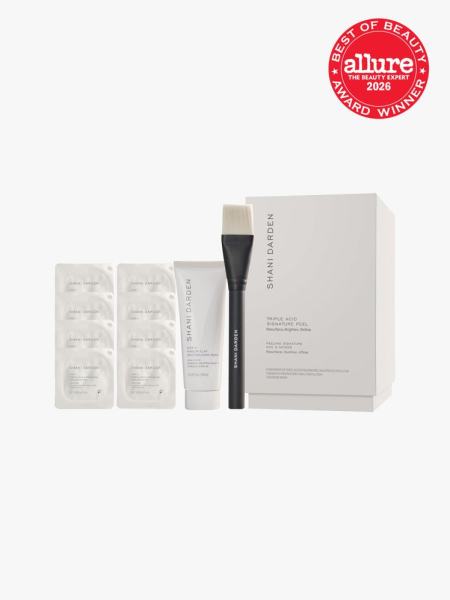
    Best Face Mask: Shani Darden Triple Acid Signature Peel
    Shani Darden Skin Care Triple Acid Signature Peel in multiple branded components on a light gray background with the 2026 best of beauty seal in the top right cornerSave to wishlistSave to wishlist

    Shani Darden

    Triple Acid Signature Peel

    $125

    Amazon

    $125

    Nordstrom

    $125

    Shop

    Allure editor in chief Jessica Cruel applying the Shani Darden Triple Acid Signature Peel

    Jessica Cruel

    Why it's worth it: Professional treatments like microneedling, lasers, and extractions can give your skin a fresh start, but you don't have to do all the upkeep in a dermatologist's office. At-home chemical peels can help maintain certain results by exfoliating dead skin cells, smoothing texture, and gradually fading lingering discoloration. For those who've moved beyond beginner-level exfoliants, Shani Darden created the Triple Acid Signature Peel, which is as close to a professional facial as you can get without leaving your bathroom—and helps explain its 2023 Best of Beauty Award.

    The two-step treatment starts with a potent trio of glycolic, lactic, and mandelic acids to tackle uneven tone, fine lines, and rough texture, followed by a mask with kaolin and bentonite clays. Because this isn't your average exfoliator, follow the directions. Apply the Triple Acid Solution Peel for just one minute (or up to two if your skin can tolerate it), then layer the Neutralizing Clay Mask directly on top for 10 minutes. The second step helps neutralize the acids and ease any tingling, so you can get the smoothing benefits without leaving the peel on longer than intended.

    Tester feedback from editor in chief Jessica Cruel

    AccordionItemContainerButtonLargeChevron

    “When I have to be on TV or walk the red carpet, there is only one product I trust to leave my skin glowing, and that's this peel. I have been lucky enough to get the full celeb facial treatment at Shani Darden's LA studio. This two-step exfoliant bottles a little of that magic up for at-home use. I love that it comes with a brush to apply the acid step. Then, you slather on the clay mask, which gives the whole thing a whipped consistency. It tingles a bit, but after I rinse, my skin is visibly glowier.” —Jessica Cruel, editor in chief

    More to know

    AccordionItemContainerButtonLargeChevron

    • Key AHAs: glycolic acid, lactic acid, mandelic acid
    • Other ingredients: kaolin clay, bentonite clay, cucumber extract
    • Fragrance-free: yes

    Best Body Lotion: Amlactin Daily Nourish Body Lotion
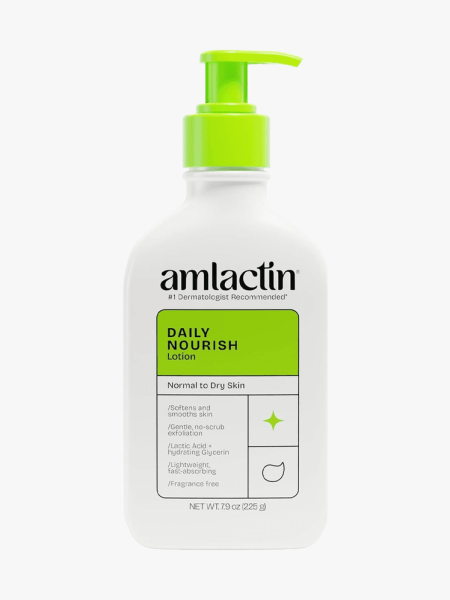
    AmLactin Daily Nourish Body Lotion with 12% Lactic Acid in branded component on a light gray backgroundSave to wishlistSave to wishlist

    AmLactin

    Daily Nourish Body Lotion

    $16 $12 (25% off)

    Amazon

    $16

    Ulta Beauty

    Allure contributing commerce writer Christa Joanna Lee applying the Amlactin Daily Nourish Body Lotion

    Christa Joanna Lee

    Why it's worth it: AmLactin makes no secret of its star ingredient—it’s right there in the brand name, which is a mash-up of ammonium lactate, a form of lactic acid. Ammonium lactate is made by combining lactic acid with ammonia, which makes it less acidic (and therefore gentler). That means it can still slough away dead skin cells while drawing in moisture to soften dry, rough patches. The brand’s Daily Nourish Body Lotion keeps things refreshingly simple, pairing 12% ammonium lactate with moisturizing glycerin, mineral oil, and not much else. “It’s especially helpful for people who want to smooth rough, bumpy patches of dry skin without complicating their body-care routine,” says Nicole Ruth, MD, a board-certified dermatologist based in New York City.

    Tester feedback from contributing commerce writer Christa Joanna Lee

    AccordionItemContainerButtonLargeChevron

    “As someone with sensitive, dry skin, lactic acid has always played nicely into my routine. So, I happily slathered AmLactin’s Daily 12% Lactic Acid Moisturizing Lotion all over the backs of my arms, where I’m constantly battling keratosis pilaris. Immediately after applying, my skin looked softer and more hydrated—but to be fair, any good moisturizer can give you that instant gratification. What surprised me was what happened over the following weeks: The uneven texture and patchy redness on the backs of my arms started looking more even and less inflamed. One of my kids even pointed out that my arms looked ‘less red,’ which might be the most brutally honest product-testing panel out there.” —Christa Joanna Lee, contributing commerce writer

    More to know

    AccordionItemContainerButtonLargeChevron

    • Key AHA: 12% ammonium lactate
    • Other ingredients: glycerin, mineral oil
    • Fragrance-free: yes

    Best Lip Treatment: Obagi Lip Therapy AHA+PHA Smoothing Micro-Peel
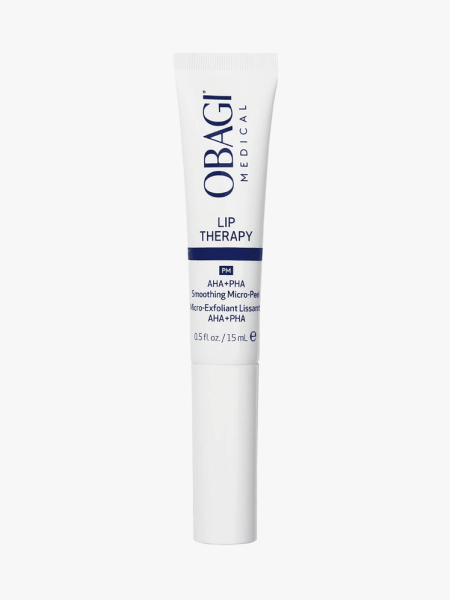
    Obagi Lip Therapy AHA+PHA Smoothing Micro-Peel in branded tube component on a light gray backgroundSave to wishlistSave to wishlist

    Obagi

    Lip Therapy AHA+PHA Smoothing Micro-Peel

    $55

    Amazon

    $55

    Dermstore

    $55

    Shop

    Han applying the Obagi Lip Therapy AHA+PHA Smoothing Micro-Peel

    Sarah Han

    Why it's worth it: You can go through all the lip balm in the world, but if dead skin cells are hanging around on the surface, your lips may still look and feel flaky. Instead of relying on a gritty scrub (which can be harsh on delicate lip skin), Obagi’s Lip Therapy AHA+PHA Smoothing Micro-Peel uses three exfoliating acids—glycolic, lactic, and gluconolactone—to gently loosen buildup and smooth rough texture. “I like that it pairs chemical exfoliation with hydrating ingredients such as glycerin and hyaluronic acid, which help attract water and support smoother, softer lips,” says Dr. Ruth.

    Shea butter and argan oil also help seal in that hydration. Just don't get too enthusiastic with lip exfoliation: “Because the lip barrier is delicate, I recommend using any exfoliating treatment conservatively and following with a bland, occlusive lip balm,” says Dr. Ruth, whose go-to recommendation is good old-fashioned Vaseline.

    Tester feedback from Han

    AccordionItemContainerButtonLargeChevron

    “I truly can't be bothered with physical lip scrubs housed in tiny tubs, but my crusty lips are constantly begging for exfoliation. The solution is a chemical exfoliator exactly like this Obagi one. It comes out like a clear lip serum that smooths my dry lips almost instantly, thanks to a blend of glycolic, lactic, and polyhydroxy acids. I like to slather on a bit, rub my lips together, and run my clean fingertips along the top and bottom just to make sure everything's absorbing properly. It's so quick and easy! I was worried about stinging but I don't experience an ounce of irritation with this formula. Since I'm not great at applying SPF to my lips during the day, I prefer applying this at night and waiting a minute or so before I layer a lip mask over it.” —Sarah Han, commerce editor

    More to know

    AccordionItemContainerButtonLargeChevron

    • Key AHAs: glycolic acid, lactic acid
    • Other ingredients: gluconolactone (PHA), hyaluronic acid, glycerin, shea butter, argan oil
    • Fragrance-free: yes

    Best Chemical Peel: SkinBetter Science AlphaRet Exfoliating Peel Pads
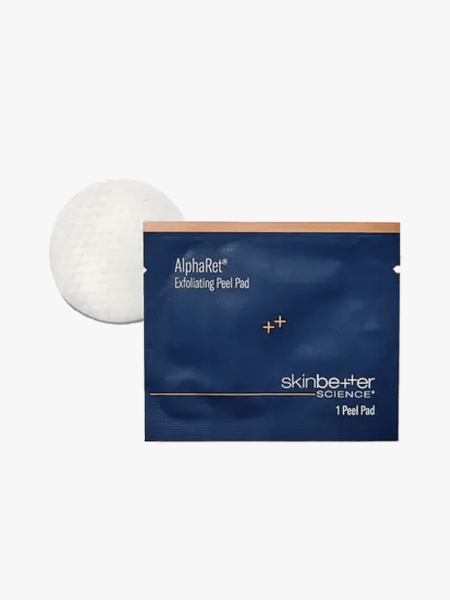
    SkinBetter Science AlphaRet Exfoliating Peel Pads in branded component on a light gray backgroundSave to wishlistSave to wishlist

    SkinBetter Science

    AlphaRet Exfoliating Peel Pads

    $130

    SkinBetter Science

    Contributing commerce editor Deanna Pai applying SkinBetter Science AlphaRet Exfoliating Peel Pads

    Deanna Pai

    Why it's worth it: If you've spent any time in a dermatologist's office (or on SkinTok), chances are you've heard of SkinBetter Science's AlphaRet. The brand's signature technology combines a retinoid with lactic acid to smooth fine lines, uneven tone, and rough texture, and its AlphaRet Exfoliating Peel Pads take things a step further. Glycolic acid joins the mix to slough away dead surface cells, while salicylic acid tackles buildup inside pores. “I like that this is a more thoughtfully balanced approach than relying on a single, aggressive exfoliating acid,” says Dr. Ruth. Heads up: The combination of exfoliating acids and a retinoid might be intense for sensitive, reactive, or already irritated skin, especially if you're new to chemical exfoliation. “These can be strong for some patients, and I only recommend using them one to three times a week,” she says.

    Tester feedback from Pai

    AccordionItemContainerButtonLargeChevron

    “I've been a fan of SkinBetter's AlphaRet for years—the Clearing Serum is amazing if you have acne-prone skin—so I had a feeling I'd like these peel pads. And I was right. They're definitely intense, with just the slightest tingling sensation, but my oily, acne-prone, dark spot-riddled skin needs the power. It left my skin smoother and clearer after a single pass. I'm using them every other night to start, alternating them with my regular retinoid (and occasionally taking breaks from both, depending on my skin). It's not for the faint of heart, but it's excellent if your skin can handle it.” —Deanna Pai, contributing commerce editor

    More to know

    AccordionItemContainerButtonLargeChevron

    • Key AHAs: lactic acid, glycolic acid
    • Other ingredients: salicylic acid, retinol
    • Fragrance-free: yes

    Frequently Asked Questions

    What are alpha hydroxy acids?

    Alpha hydroxy acids are a family of water-soluble chemical exfoliants, often derived from sources like sugarcane, milk, and fruit, that help loosen the bonds holding dead skin cells together. By clearing away that buildup, they can improve uneven texture, discoloration, and the appearance of fine lines.

    Unlike oil-soluble beta hydroxy acids (BHAs), such as salicylic acid, which can penetrate pores to help clear excess oil and congestion, AHAs primarily work on the skin's surface. And while they all share the same basic job description, some are more aggressive than others. Here's how the most common types stack up, according to Dr. Ruth:

    • Glycolic acid: The smallest of the bunch, glycolic acid penetrates skin relatively easily, making it one of the more potent AHAs for tackling rough texture, dark spots, and fine lines. The downside? It can be irritating, especially for sensitive skin.
    • Lactic acid: A multitasker that exfoliates while also attracting moisture, making it a good option for dry skin that needs smoothing without sacrificing hydration.
    • Mandelic acid: Its larger molecular size means it penetrates more slowly, making it generally better tolerated by sensitive or easily irritated skin.
    • Citric, malic, and tartaric acids: These fruit-derived AHAs can contribute to exfoliation and help adjust a formula's pH, though they're less studied as standalone exfoliants.

    “Glycolic acid tends to be the most potent exfoliator, while lactic acid can provide exfoliation with some hydrating benefits,” says Dr. Ruth. “Mandelic acid penetrates more gradually and may be better tolerated by easily irritated skin.”

    Can you use AHAs with retinol?

    Yes, AHAs and retinol can absolutely coexist in your skin-care routine (just look at SkinBetter Science's AlphaRet Exfoliating Peel Pads on our list), but that doesn't mean you should go all in on both at once. Both ingredients encourage skin cell turnover, so combining them can increase the risk of dryness, redness, and irritation, especially if you're new to either one. If you’re a beginner to acids and/or retinol, “rather than layering them in the same routine, I recommend alternating nights,” says Dr. Ruth. “For example, using an AHA one night and separate retinol another. You will get the benefits of both while giving the skin barrier time to recover.”

    Who shouldn’t use AHAs?

    AHAs aren't off-limits for sensitive skin, but if you're dealing with an active eczema flare, rosacea, a compromised skin barrier, or skin that's already irritated or peeling, it's best to hold off until things calm down. The same goes for freshly waxed skin or skin recovering from certain in-office treatments, like lasers and chemical peels. Even if your skin generally tolerates exfoliation well, dermatologists warn that AHAs can increase sun sensitivity, making your skin more vulnerable to UV damage. When introducing an AHA, start slowly, consider using it at night, and be especially diligent about applying broad-spectrum sunscreen with SPF 30 or higher during the day.

    Meet the experts

    • Alexandra Bowles, DO, a board-certified dermatologist at MONA Dermatology based in Cincinnati
    • Nicole Ruth, MD, a board-certified dermatologist at Weiser Skin MD based in New York City
    • Mamina Turegano, MD, a board-certified dermatologist, internist, and dermatopathologist based in New Orleans

    How we test and review products

    When Allure tests a product, our editors look at it from every angle in an effort to best serve you. We review ingredients, scrutinize brand claims, and, when necessary, examine peer-reviewed scientific and medical studies. In addition to testing each and every product that’s included in each and every review, we rely on experts who shape their fields, including dermatology, cosmetic chemistry, and medicine, to help us vet the ingredients and formulas.

    For our list of best alpha hydroxy acid products, we considered each product’s performance across five primary categories: product ingredients and efficacy, packaging, fragrance, texture, and product wear. Every product was determined to have excelled in each category by our editorial team, which is composed of in-house writers and editors as well as contributors—along with special consideration from board-certified dermatologists. To learn more information on our reporting and testing processes, read our complete reviews process and methodology page.

    Our staff and testers

    A beauty product is a personal purchase. You might be searching for a face cream to address persistent dryness or a new nail product to add to your Sunday self-care routine; you may simply be browsing around for the latest launches to hit the hair market. No matter what you seek or your individual needs and concerns, Allure wants to ensure that you love anything we recommend in our stories. We believe that having a diverse team of writers and editors—in addition to the wide range of outside testers and industry experts we regularly call upon—is essential to reaching that goal.

    After all, can we really say a skin-care product is the "best" for people over 50 if the only testers we’ve solicited opinions from folks who have yet to hit 30? Can we honestly deem a high-end diffuser worthy of your hard-earned cash if it’s never been tested on curls? We’re proud that our staff spans a wide range of ages, skin tones, hair textures, genders, and backgrounds, which means that we are able to fairly assess any beauty product that comes into the beauty closet.


  • 37 Best Gifts for Teenage Girls, According to Teens

    37 Best Gifts for Teenage Girls, According to Teens

    Image contains a college of silos of the best gifts for teenage girls on an offwhit ebackgroundCollage: Jemeria Davison; Source images: Courtesy of brandsSave StorySave this storySave StorySave this story

    Choosing the best gifts for teenage girls can feel like trying to keep up with TikTok trends—blink, and you're already behind. Between the latest beauty crazes, the influx of influencers on their screens, and teens having very specific opinions about what's cool, finding something they'll actually love (and use) is no small feat.

    But don't panic: To help you navigate the ever-changing tastes of Gen Z and Gen Alpha, we've rounded up 37 fun, practical gifts that got the stamp of approval from actual teens we talked to. Think viral beauty favorites from Rhode, Summer Fridays, and Glow Recipe; makeup sets from Dior and Charlotte Tilbury; and in-demand accessories like Jellycat plushies (which, frankly, our editors want for themselves). We've also thrown in a few tech favorites, from colorful over-ear headphones to instant cameras, for teens whose wish lists go well beyond the beauty aisle.

    Our Top Gifts For Teenage Girls

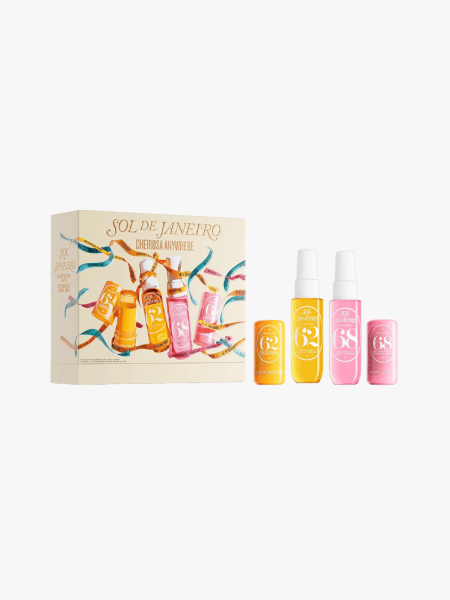
    • Scent with Love: Sol de Janeiro Cheirosa Anywhere Set, $49
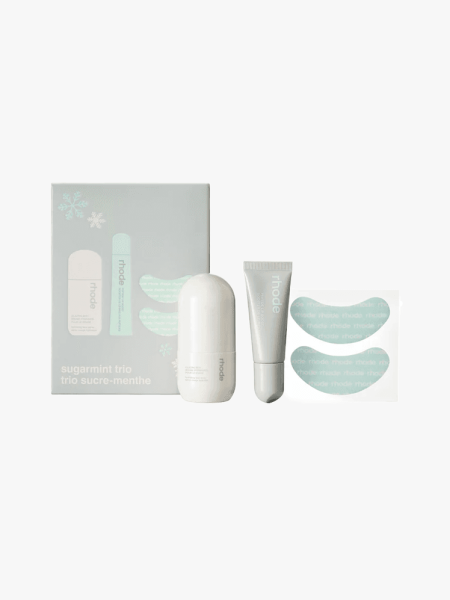
    • Mint to Be: Rhode Sugarmint Trio Limited Edition Skincare Set, $58
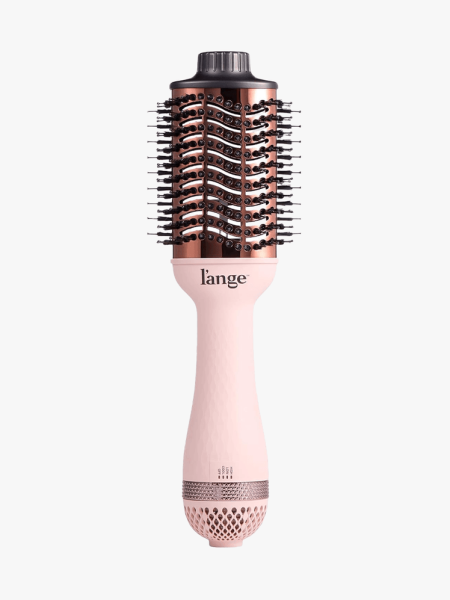
    • Brushed with Greatness: L’ange Le Volume 2-in-1 Titanium Brush Dryer, $69
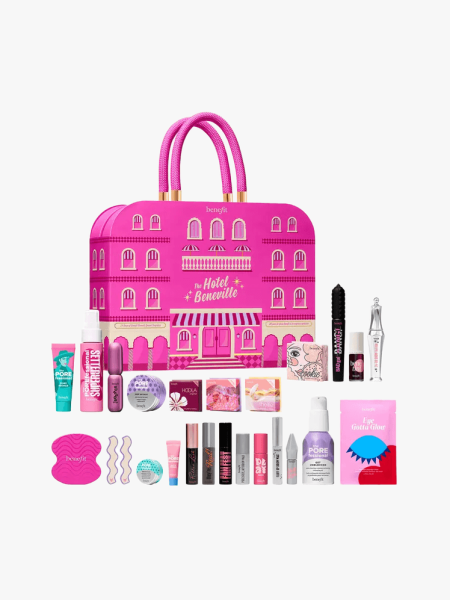
    • The VIP Treatment: Benefit Cosmetics The Hotel Beneville, $168
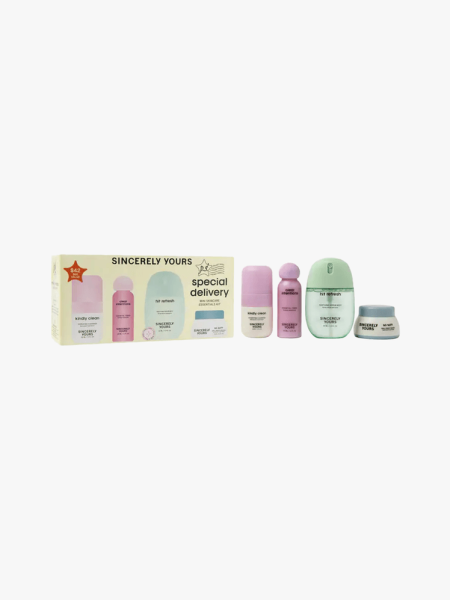
    • Handle With Care: Sincerely Yours P.S. Special Delivery, $42
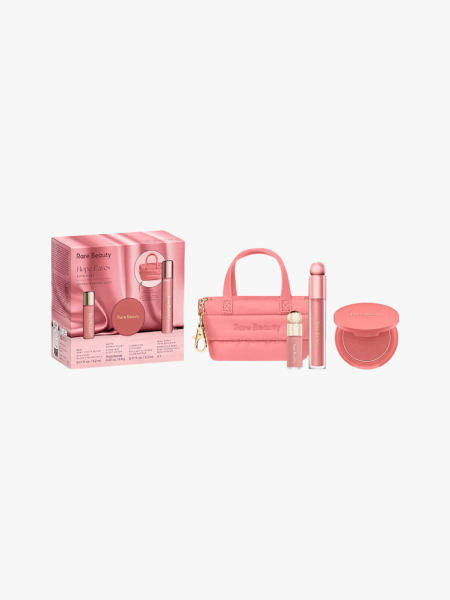
    • Think Pink: Rare Beauty Hope Faves, $54
    • Glow From Head to Toe: Medicube Fresh Glow Body Kit, $25
  • 6 Best Sunscreens for Dry Skin 2026 to Hydrate and Protect

    6 Best Sunscreens for Dry Skin 2026 to Hydrate and Protect

    Image contains Allure contributing commerce writer Christa Joanna Lee with the Belif The True Cream Aqua Bomb Sunscreen...Collage: Jemeria Davison; Source images: Courtesy of brandsSave StorySave this storySave StorySave this story

    Whether dryness stems from the weather, aging skin, hormonal changes, or medication, the best sunscreens for dry skin provide instant relief and hydration, smoothing flakiness and rough patches while leaving an illuminating glow. “When choosing a sunscreen for dry or sensitive skin, it’s important to find one that protects and hydrates the skin barrier,” says Mona Foad, MD, a board-certified dermatologist in Cincinnati. These can include ingredients like “hyaluronic acid, glycerin, niacinamide, or ceramides,” which attract and lock in moisture while soothing irritation, says Ashley McGuinness, MD, a board-certified dermatologist in Chesterfield, Missouri. Both chemical and mineral sunscreens fit the hydrating bill; however, mineral UV filters such as zinc oxide and titanium dioxide are overall kinder to sensitive skin.

    Our Top Sunscreens for Dry Skin

    • Best Overall Chemical: La Roche-Posay Anthelios UVDefense SPF 50 Sunscreen with BEMT, $40
    • Best Overall Mineral: Shiseido Ultimate Sun Protector Lotion SPF 60+, $26
    • Best Lightweight: Belif The True Cream Aqua Bomb Sunscreen SPF 45, $38
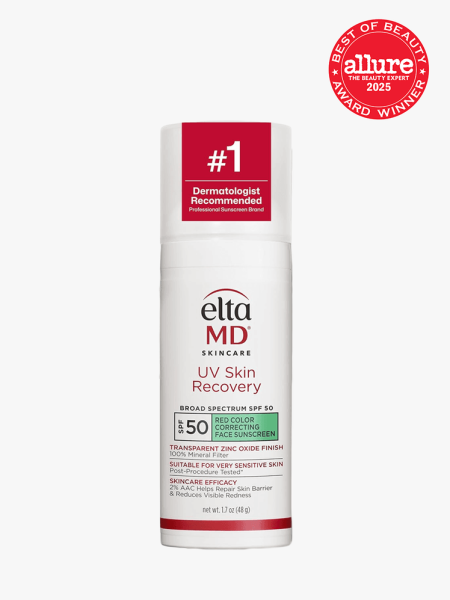
    • Best for Redness: EltaMD Skin Recovery Red Color Correcting SPF 50, $53

    Frequently Asked QuestionsAccordionItemContainerButtonLargeChevron

    • Which sunscreen is best for dry skin?
    • Do you put moisturizer or sunscreen first?
    • Meet the experts
    • How we test and review products
    • Our staff and testers

    Allure editors test tons of sunscreen formulas—both chemical and mineral—all year round, but these are the formulas that go beyond UV protection, offering moisturizing ingredients and antioxidants that give you a glowing, hydrated complexion. We’re spilling our top picks that glide on like a dream while keeping your skin moisturized all day.

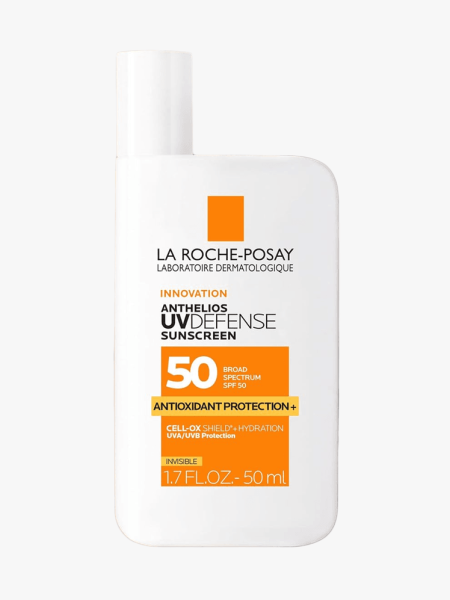
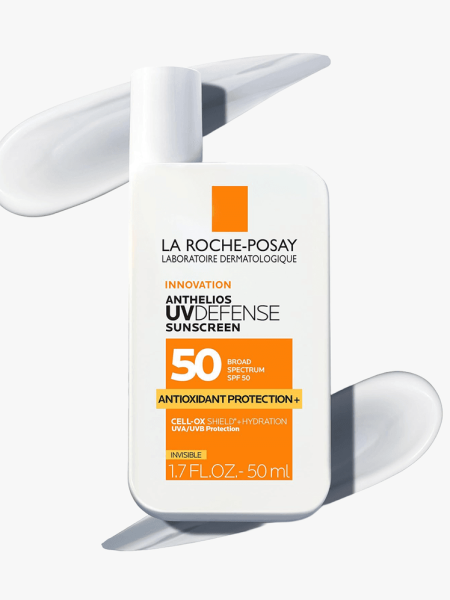
    Best Overall Chemical: La Roche-Posay Anthelios UVDefense Sunscreen SPF 50

    La Roche-Posay Anthelios UVDefense SPF 50 Sunscreen with BEMT in branded component on a light gray backgroundSave to wishlistSave to wishlist

    La Roche-Posay

    Anthelios UVDefense Sunscreen SPF 50

    $40

    Amazon

    $40

    La Roche-Posay

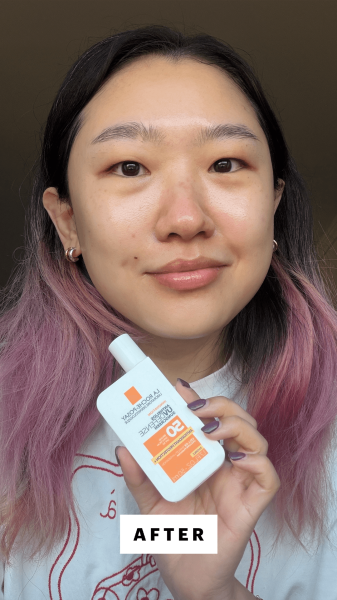
    Allure commerce editor Sarah Han applying the La Roche-Posay Anthelios UVDefense Sunscreen SPF 50

    Sarah Han

    Why it’s worth it: There's a new UV filter in town, and it's kind of a big deal. Meet bemotrizinol (BEMT), the first new sunscreen filter approved by the FDA in more than two decades—and La Roche-Posay is among the first brands to bring it stateside. Anthelios UVDefense SPF 50 Sunscreen features 2% BEMT, which protects against both UVA and UVB rays and is photostable, meaning it doesn't break down as easily when exposed to sunlight. The brand’s patented Cell-Ox Shield technology combines sunscreen filters with an antioxidant blend of litchi extract, alteromonas, cassia senna alata, and vitamin E to help fend off free radicals caused by UV exposure and pollution. Dry skin gets a hydration boost, too, thanks to moisture-attracting glycerin and butylene glycol, plus dimethicone, which helps seal in moisture and smooth over rough, flaky patches.

    Of course, even the most impressive sunscreen ingredients won't mean much if you dread putting the stuff on. Luckily, this one also gets high marks for how it feels. "It feels silky on the skin with no white residue," says Jane Yoo, MD, a dual board-certified dermatologist based in New York City, who gave it the ultimate sweat test during the Chicago Marathon. "I generously reapplied all over my face, neck, and arms at the halfway point," she says, adding that it felt lightweight and smooth without getting greasy or stinging her eyes, even after a second application. If it can hold its own through 26.2 miles, your morning commute should be a breeze.

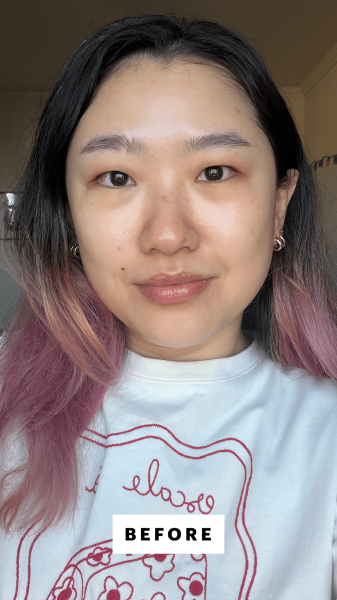
    A selfie of Allure commerce editor Sarah Han before applying the La RochePosay Anthelios UVDefense Sunscreen SPF 50

    Han after applying the La Roche-Posay Anthelios UVDefense Sunscreen SPF 50

    Sarah HanAllure commerce editor Sarah Han after applying the La RochePosay Anthelios UVDefense SPF 50 Sunscreen with BEMT

    Han after applying the La Roche-Posay Anthelios UVDefense Sunscreen SPF 50

    Sarah Han

    Tester feedback from commerce editor Sarah Han

    AccordionItemContainerButtonLargeChevron

    "La Roche-Posay does it again. I love sunscreens that are on the more fluid side—think serum-like textures—and the Anthelios UVDefense SPF 50 Sunscreen with BEMT clearly falls under that umbrella! Like everyone in the beauty world, I'm ecstatic about a new UV filter, but I'm also hoping *taps watch* that the next approval doesn't take another 36 years. (We need to keep up with our global counterparts who are light-years ahead!!) Anyway, back to this formula. It's so lightweight and elegant that it practically disappears on contact, especially when you're applying two finger lengths' worth (the standard guideline). I was a little extra for this particular demo and used three fingers, so it did take a beat longer to fully rub in. Either way, the formula feels like nothing on the skin—and outside of the depths of winter—my combo skin and I don't need a standalone moisturizer because this doubles as both! The finish is definitely not as glowy as the UVAir serum, but these days, I kind of prefer a more ‘natural’ and ‘balanced’ look." —Sarah Han, commerce editor

    More to know

    AccordionItemContainerButtonLargeChevron

    • Type: chemical
    • Key ingredients: 2% BEMT, 3% avobenzone, 5% octisalate, 6% octocrylene, 11% homosalate, Cell-Ox Shield technology (litchi extract, alteromonas, cassia senna alata, and vitamin E), glycerin, butylene glycol, dimethicone
    • Tinted: no
    • Water-resistant: not disclosed
    • Fragrance-free: yes
    • Who it’s for: all skin types, though those with particularly sensitive skin may want to patch-test the formula first, as chemical UV filters can sometimes cause irritation

    Best Overall Mineral: Shiseido Ultimate Sun Protector Lotion Mineral SPF 60+

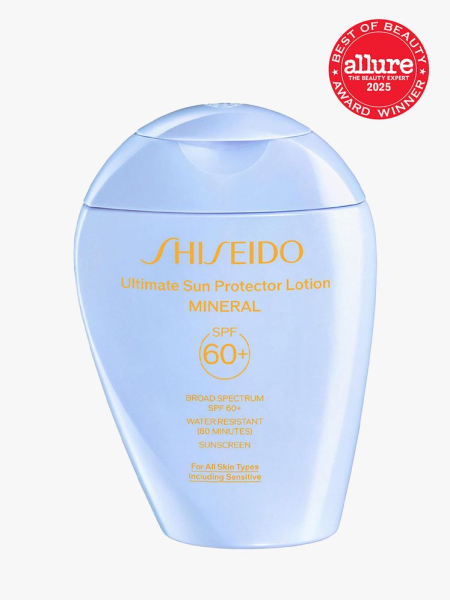
    Shiseido Ultimate Sun Protector Lotion Mineral SPF 60+ in branded component with best of beauty 2025 seal in the top right cornerSave to wishlistSave to wishlist

    Shiseido

    Ultimate Sun Protector Lotion Mineral SPF 60+

    $26 $22 (15% off)

    Amazon

    $26

    Nordstrom

    $26

    Sephora

    Allure senior beauty editor Jesa Marie Calaor applying the Shiseido Ultimate Sun Protector Lotion Mineral SPF 60+

    Jesa Marie Calaor

    Why it’s worth it: When you want your sunscreen to feel more like soothing skin care—and less, well, sunscreen-y—Shiseido’s Ultimate Sun Protector Lotion Mineral SPF 60+ is the answer. The 2025 Best of Beauty Award winner has a lightweight, lotion-like texture that glides on smoothly and dries down to a non-greasy, invisible finish. It’s spiked with skin-loving ingredients like raspberry extract, witch hazel, glycerin, and five types of algae to keep your complexion hydrated and calm. Our tester swears by how seamlessly it layers under makeup—and while the bottle is on the smaller side, a little does go a long way.

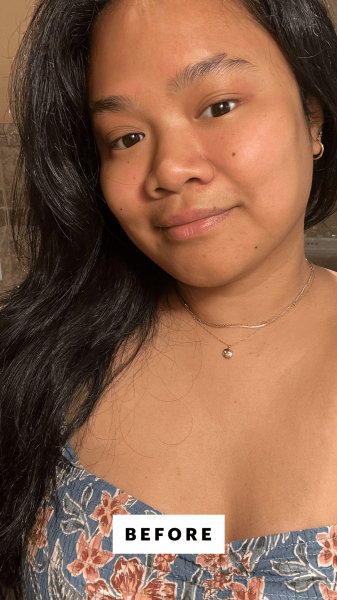
    Selfie of Jesa Calaor before applying the Shiseido Urban Environment OilFree Mineral Clear Sunscreen SPF 42

    Calaor before applying the Shiseido Ultimate Sun Protector Lotion Mineral SPF 60+

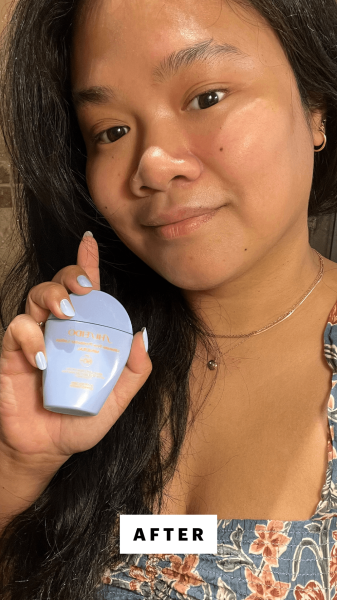
    Jesa Marie CalaorSelfie of Jesa Calaor after applying the Shiseido Urban Environment OilFree Mineral Clear Sunscreen SPF 42

    Calaor after applying the Shiseido Ultimate Sun Protector Lotion Mineral SPF 60+

    Jesa Marie Calaor

    Tester feedback from senior beauty editor Jesa Marie Calaor

    AccordionItemContainerButtonLargeChevron

    "With my extra-dry complexion, I am always looking for hydrating products that leave me with a summery, dewy glow. This sunscreen gives me exactly that. The mineral formula is more like a fluid than a lotion, and quickly melts down to blend in with my medium-tan skin." —Jesa Marie Calaor, senior beauty editor

    More to know

    AccordionItemContainerButtonLargeChevron

    • Type: mineral
    • Key ingredients: 5.7% titanium dioxide, 5.9% zinc oxide, raspberry extract, witch hazel, glycerin, algae
    • Tinted: no
    • Water-resistant: 80 minutes
    • Fragrance-free: yes
    • Who it’s for: people with extra-dry skin

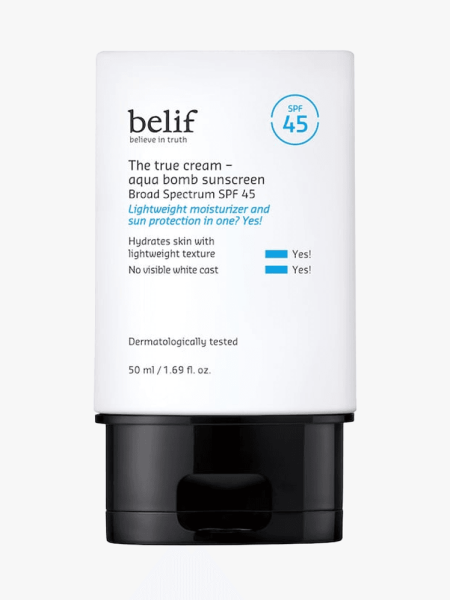
    Best Lightweight: Belif The True Cream Aqua Bomb Sunscreen SPF 45

    Belif The True Cream Aqua Bomb Sunscreen SPF 45 in branded component on a light gray backgroundSave to wishlistSave to wishlist

    Belif

    The True Cream Aqua Bomb Sunscreen SPF 45

    $38 $27 (29% off)

    Amazon

    $38

    Sephora

    $38

    Shop

    Allure contributing commerce writer Christa Joanna Lee applying the Belif The True Cream Aqua Bomb Sunscreen SPF 45

    Christa Joanna Lee

    Why it’s worth it: What if your favorite moisturizer came with a side of SPF? That's the idea behind Belif's Aqua Bomb Sunscreen SPF 45: it takes everything fans love about the brand's editor-favorite The True Cream Aqua Bomb Moisturizer and adds broad-spectrum sun protection. Like the moisturizer, it's packed with moisture-boosting glycerin, soothing panthenol, brightening niacinamide, and Belif's botanical blend of oat seed, calendula, and other calming herbs.

    The biggest difference comes down to texture, which has a “creamy consistency that feels so classically K-beauty,” says Dr. Yoo. That signature Korean beauty feel comes courtesy of lightweight silicones and smoothing polymers, which give the sunscreen a silky, almost primer-like finish. It glides on without feeling heavy or greasy, making it an easy addition to your morning routine (or a replacement for a separate moisturizer, depending on your skin type). "It's refreshing and quick-absorbing while still leaving skin feeling plumped and comfortable," she says.

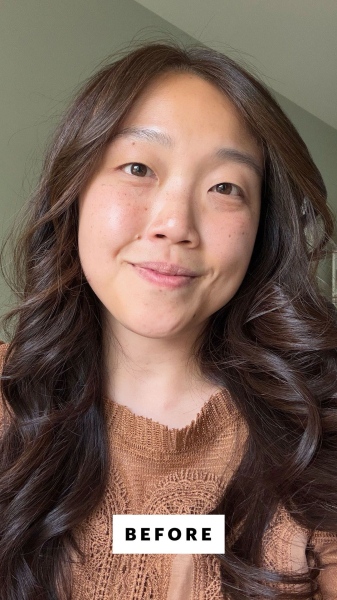
    Allure contributing commerce writer Christa Joanna Lee applying the Belif Aqua Bomb Sunscreen SPF 45

    Lee before applying the Belif The True Cream Aqua Bomb Sunscreen SPF 45

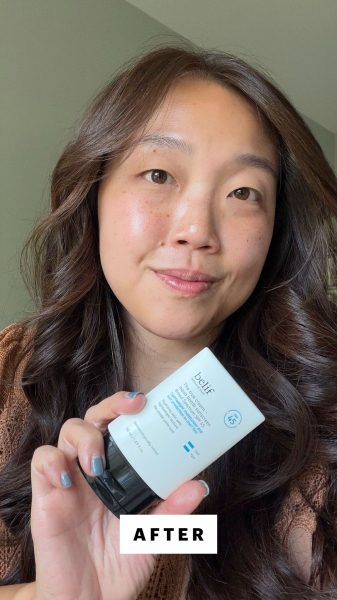
    Christa Joanna LeeAllure contributing commerce writer Christa Joanna Lee after applying the Belif Aqua Bomb Sunscreen SPF 45

    Lee after applying the Belif The True Cream Aqua Bomb Sunscreen SPF 45

    Christa Joanna Lee

    Tester feedback from contributing commerce writer Christa Joanna Lee

    AccordionItemContainerButtonLargeChevron

    “I have yet to try the famous Belif Aqua Bomb Moisturizer (I know—sacrilege), but after practically emptying my tube of Aqua Bomb Sunscreen SPF 45 in just a couple of weeks, I'm not sure I need to. This sunscreen checks every box on my wish list: It's incredibly lightweight and moisturizing, has a cream texture yet absorbs with the speed and ease of a gel, and leaves behind absolutely zero white cast. The results may not be dramatic in my demo, but the difference is immediately noticeable once it's on your skin. I couldn't ask for much more from a sunscreen.” —Christa Joanna Lee, contributing commerce writer

    More to know

    AccordionItemContainerButtonLargeChevron

    • Type: chemical
    • Key ingredients: 2.7% avobenzone, 9% homosalate, 4.5% octisalate, 9% octocrylene, glycerin, panthenol, niacinamide, oat seed, calendula
    • Tinted: no
    • Water-resistant: not disclosed
    • Fragrance-free: yes
    • Who it’s for: everyone, especially for people with dry skin

    Best for Redness: EltaMD Skin Recovery Red Color Correcting SPF 50

    EltaMD UV Skin Recovery Red Color Correcting SPF 50 in branded component on a light gray background with 2025 best of beauty seal in the top right cornerSave to wishlistSave to wishlist

    EltaMD

    UV Skin Recovery Red Color Correcting SPF 50

    $53

    Amazon

    $53

    Dermstore

    Calaor applying the EltaMD Skin Recovery Red Color Correcting SPF 50

    Jesa Marie Calaor

    Why it’s worth it: A little color theory goes a long way when it comes to tackling redness: Green cancels out red. EltaMD's UV Skin Recovery Red Color Correcting SPF 50 puts that art-class lesson to very good use. A 2025 Best of Beauty Award winner, this mineral sunscreen has a sheer green tint that helps neutralize visible redness. But it does more than color-correct: The formula features soothing Centella asiatica (a.k.a. cica), an amino acid complex of taurine, arginine, and glycine to help stressed, irritated skin bounce back, and ceramides to reinforce the moisture barrier and keep dryness in check. The lightweight, non-greasy texture is great for sensitive, redness-prone skin, whether you're dealing with a temporary flare-up, a naturally flushed complexion, or irritation brought on by cold, dry weather.

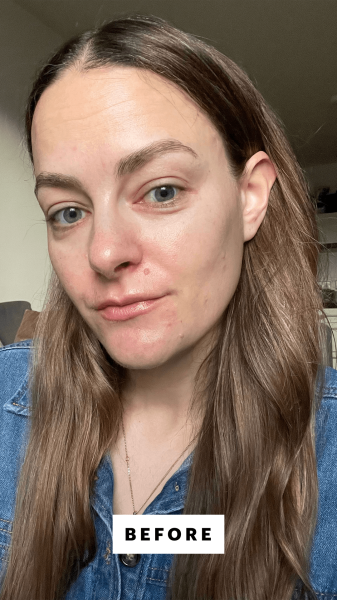
    Allure content director Sophia Panych before applying the EltaMD UV Skin Recovery Red Color Correcting Green Tint SPF 50

    Allure content director Sophia Panych before applying the EltaMD Skin Recovery Red Color Correcting SPF 50

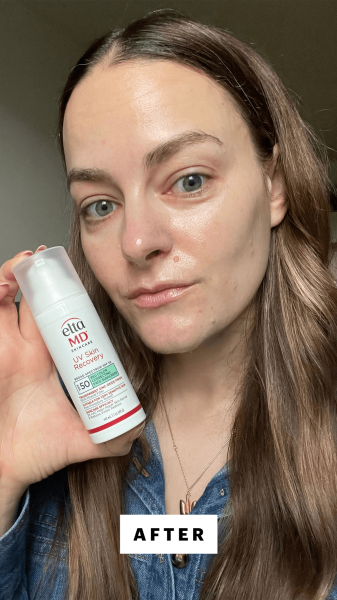
    Sophia PanychPanych after applying the EltaMD UV Skin Recovery Red Color Correcting Green Tint SPF 50

    Panych after applying the EltaMD Skin Recovery Red Color Correcting SPF 50

    Sophia Panych

    Tester feedback from senior editor Jesa Marie Calaor

    AccordionItemContainerButtonLargeChevron

    “I love how this green sunscreen tones down the redness I typically experience around my nose and on my cheeks. It feels so good—like a moisturizer—and never ever leaves a white cast.” —Jesa Marie Calaor, senior editor

    Tester feedback from content director Sophia Panych

    AccordionItemContainerButtonLargeChevron

    “After my morning cleanse, vitamin C serum, and face cream, I applied two to three pumps of the stuff on my face. It goes on green, then immediately turns white, and then sheers out as you rub it in. On days when I wore makeup, I’d wait about five minutes before applying my favorite base (Pat McGrath Labs Skin Fetish Sublime Perfection Foundation, Monika Blunder Blunder Cover, or the Lisa Eldridge Enhancing Skin Tint). The EltaMD UV Skin Recovery worked well with all of them and didn’t pill throughout the day. I'm in my late 30s, have combination skin, and live in a city with very hard water that dries you out from head to toe. I loved that this sunscreen left my complexion looking dewy, something I’ve never seen from an all-mineral sunscreen.” —Sophia Panych, content director

    More to know

    AccordionItemContainerButtonLargeChevron

    • Type: mineral
    • Key ingredients: 12.9% zinc oxide, amino acids, cica, ceramides
    • Tinted: yes (green tinted)
    • Water-resistant: no
    • Fragrance-free: yes
    • Who it’s for: anyone dealing with redness

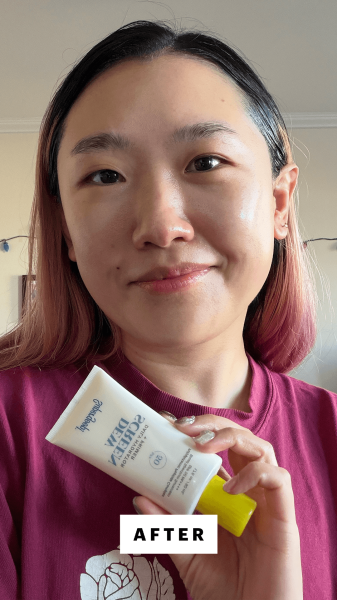
    Best Dewy Finish: Supergoop Dewscreen Hydrating Primer SPF 50

    Supergoop! Dewscreen Hydrating Primer SPF 50 in branded tube component on a light gray backgroundSave to wishlistSave to wishlist

    Supergoop

    Dewscreen Hydrating Primer SPF 50

    $38

    Nordstrom

    $38

    Ulta Beauty

    $38

    Shop

    Allure commerce editor Sarah Han applying the Supergoop Dewscreen Hydrating Primer SPF 50

    Sarah Han

    Why it’s worth it: Some days, sunscreen is the only thing you have time (or energy) to put on your face. Other days, you're going all out with a full face of makeup. Either way, Supergoop's Dewscreen Hydrating Primer SPF has you covered. This chemical sunscreen doubles as a makeup primer, creating a smooth, grippy base that helps foundation apply evenly and stay put, without leaving a white cast. The finish is fresh and dewy without feeling greasy, even on our tester's combination skin, which tends to get oily in certain areas. Peptides help skin look plumper and bouncier, while hyaluronic acid and tremella mushroom provide plenty of hydration without making skin feel slick. The only minor trade-off? It takes a little longer to rub in than some other sunscreens, but for this much moisture, those extra few seconds are well worth it.

    Han before applying the Supergoop Dewscreen Hydrating Primer SPF 50

    Han before applying the Supergoop Dewscreen Hydrating Primer SPF 50

    Sarah HanHan after applying the Supergoop Dewscreen Hydrating Primer SPF 50

    Han after applying the Supergoop Dewscreen Hydrating Primer SPF 50

    Sarah Han

    Tester feedback from commerce editor Sarah Han

    AccordionItemContainerButtonLargeChevron

    “Supergoop is a top-tier sun-care brand, but the brand really deserves its flowers with its latest creation. Dewscreen is easily my favorite Supergoop product, ever: It’s a true moisturizer-first formula with a boost of SPF, which my dehydrated skin drinks up like that, and there’s just a hint of grippiness that helps my makeup look flawless and stay in place all freaking day and night. Dewscreen makes my skin look like a dewy dumpling—no matter how tired I feel in the morning, it instantly perks up my skin. Because it’s so moisturizing, it takes a beat to fully blend out, but that’s not a con at all. I’d rather be as thorough as possible and ensure I’m applying the right amount—yes, even on the dreariest winter days.” —Sarah Han, commerce editor

    More to know

    AccordionItemContainerButtonLargeChevron

    • Type: chemical
    • Key ingredients: 3% avobenzone, 9% homosalate, 4.5% octisalate, 9% octocrylene, peptides, hyaluronic acid
    • Tinted: no
    • Water-resistant: not disclosed
    • Fragrance-free: yes
    • Who it’s for: all skin types

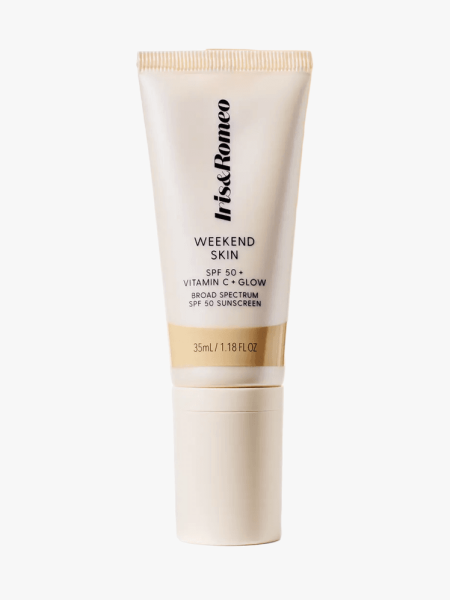
    Best Tinted: Iris & Romeo Weekend Skin SPF 50 + Vitamin C + Glow

    Iris & Romeo Weekend Skin SPF 50 + Vitamin C + Glow in branded tube component on a light gray backgroundSave to wishlistSave to wishlist

    Iris & Romeo

    Weekend Skin SPF 50 + Vitamin C + Glow

    $50

    Nordstrom

    $50

    Sephora

    $50

    Shop

    Why it’s worth it: Iris & Romeo’s Weekend Skin SPF 50 + Vitamin C + Glow comes in four flexible shades—Universal, Cool Glow, Warm Glow, and Bronze Glow—designed to flatter a range of skin tones while delivering a noticeable glow. The formula leans heavily into brightening, thanks to a potent mix of vitamin C, vitamin E (to help keep that vitamin C stable), and niacinamide for a more even-looking complexion over time. The texture is on the richer side, so it wears more like a tinted moisturizer than a barely-there sunscreen, which we love for light coverage days.

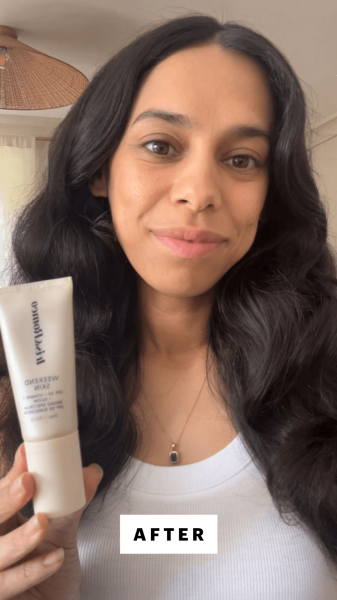
    Allure senior commerce director Shanna Shipin applying the Iris & Romeo Weekend Skin SPF 50 + Vitamin C + Glow

    Shanna ShipinShipin after applying the Iris  Romeo Weekend Skin SPF 50  Vitamin C  Glow

    Shipin after applying the Iris & Romeo Weekend Skin SPF 50 + Vitamin C + Glow

    Shanna Shipin

    Tester feedback from senior commerce director Shanna Shipin

    AccordionItemContainerButtonLargeChevron

    “It may be called ‘weekend skin,’ but I use this beauty every single day. This moisturizer hydrates, provides impressive SPF 50 coverage, and leaves me with a natural radiance that’s glowy, not glittery. I have acne scars, flakiness, and fine lines; still, Weekend Skin leaves me looking airbrushed, well-rested, and, frankly, I'm flabbergasted at how it does all I need it to do so elegantly and effectively.” —Shanna Shipin, senior commerce director

    More to know

    AccordionItemContainerButtonLargeChevron

    • Type: mineral
    • Key ingredients: 10% non-nano zinc oxide, vitamin C, vitamin E, and niacinamide
    • Fragrance-free: yes
    • Who it’s for: all skin types that want a bit of coverage, including sensitive skin and mature skin

    Frequently Asked Questions

    Which sunscreen is best for dry skin?

    “When searching for sunscreens for dry skin, it’s crucial to find products with ingredients that moisturize and improve the skin barrier, like hyaluronic acid, glycerin, niacinamide, dimethicone, or ceramides,” says Dr. McGuinness. Mineral sunscreens with zinc oxide or titanium dioxide are great for sensitive skin, but chemical sunscreens packed with hydrating ingredients work just as well. Extra points if your sunscreen of choice includes antioxidants (hi, vitamin E and vitamin C) to combat free radicals. And, of course, stick to lightweight, non-greasy formulas for a comfortable, glowing finish.

    “In addition to making sure your sunscreen has broad-spectrum protection with an SPF of 30 or higher, people with dry skin should opt for a cream or lotion-based formula instead of gels or sprays, which can sometimes be more drying,” says Dr. Foad. Sprays commonly feature alcohol, which people with dry skin should definitely avoid, Dr. McGuinness points out.

    Do you put moisturizer or sunscreen first?

    For both mineral and chemical formulas, start with a lightweight moisturizer, let it fully absorb, then follow with sunscreen. That said, if your skin isn’t especially dry and you prefer chemical SPFs, you can often skip the separate moisturizer and apply sunscreen directly—many formulas are hydrating enough on their own.

    Meet the experts

    • Ashley McGuinness, MD, a board-certified dermatologist at Schweiger Dermatology Group in Chesterfield, Missouri
    • Mona Foad, MD, a board-certified dermatologist and founder of MONA Dermatology in Cincinnati
    • Jane Yoo, MD, a dual board-certified dermatologist and Mohs surgeon based in New York City

    How we test and review products

    When Allure tests a product, our editors look at it from every angle in an effort to best serve you. We review ingredients, scrutinize brand claims, and, when necessary, examine peer-reviewed scientific and medical studies. In addition to testing each and every product that's included in each and every review, we rely on experts who shape their fields, including dermatology, cosmetic chemistry, and medicine, to help us vet the ingredients and formulas.

    For our list of the best sunscreens for dry skin, we considered each product's performance across five primary categories: product ingredients and efficacy, packaging, fragrance, texture, and product wear. Every product was determined to have excelled in each category by our editorial team, which is composed of in-house writers and editors as well as contributors—along with special consideration from dermatologists. To learn more information on our reporting and testing processes, read our complete reviews process and methodology page.

    Our staff and testers

    A beauty product is a personal purchase. You might be searching for a face cream to address persistent dryness or a new nail product to add to your Sunday self-care routine; you may simply be browsing around for the latest launches to hit the hair market. No matter what you seek or your individual needs and concerns, Allure wants to ensure that you love anything we recommend in our stories. We believe that having a diverse team of writers and editors—in addition to the wide range of outside testers and industry experts we regularly call upon—is essential to reaching that goal.

    After all, can we really say a skin-care product is the "best" for people over 50 if the only testers we've solicited opinions from folks who have yet to hit 30? Can we honestly deem a high-end diffuser worthy of your hard-earned cash if it's never been tested on curls? We're proud that our staff spans a wide range of ages, skin tones, hair textures, genders, and backgrounds, which means that we are able to fairly assess any beauty product that comes into the beauty closet.
  • 7 Best Sunscreens for Sensitive Skin That Won’t Cause Irritation

    7 Best Sunscreens for Sensitive Skin That Won’t Cause Irritation

    Image contains a collage of silos of the best sunscreens for sensitive skin on an offwhite backgroundCollage: Jemeria Davison; Source images: Courtesy of brandsSave StorySave this storySave StorySave this story

    When your skin is easily irritated by what can feel like everything under the sun, the best sunscreens for sensitive skin may be your saving grace. Even the most beloved sunscreen formulas might not be a good match for reactive skin, since certain chemical UV filters can penetrate the skin and trigger irritation or allergic reactions in some people. Enter mineral sunscreens, which make up every recommendation on our list. These use zinc oxide and titanium dioxide to protect against UV rays while largely staying on the skin's surface, making them less likely to trigger irritation. The growing skin-care market is catering to those with reactive skin more than ever, so it's easier to find a formula that suits you and your sensitivity while providing top-of-the-line protection against cancer-causing sun exposure.

    Our Top Sunscreens for Sensitive Skin

    • Best Overall: EltaMD UV Skin Recovery Red Color Correcting Green Tint SPF 50, $53
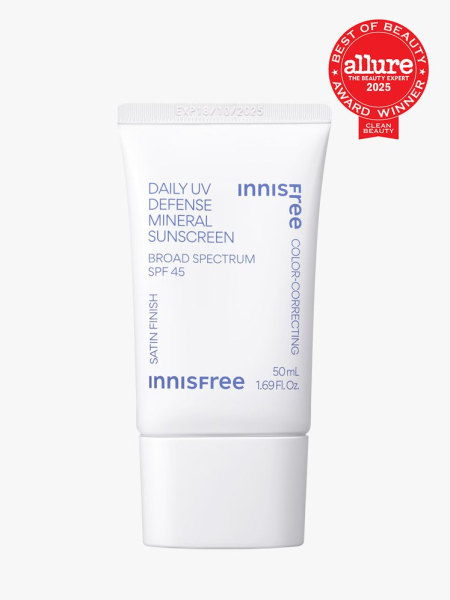
    • Best for Redness: Innisfree Daily UV Mineral Sunscreen SPF 45, $22
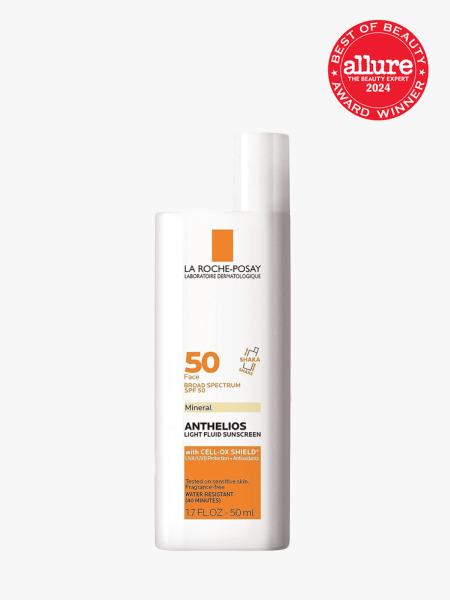
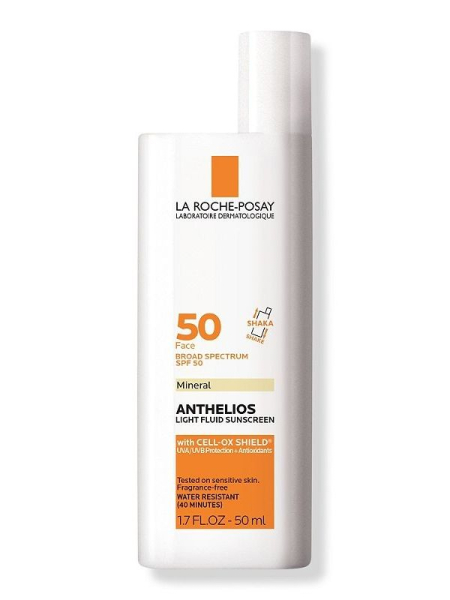
    • Best Drugstore: La Roche-Posay Anthelios 50 Mineral Ultra Light Sunscreen, $43
    • Best Over Makeup: Colorescience Sunforgettable Total Protection Brush-On Shield SPF 50, $58

    Frequently Asked QuestionsAccordionItemContainerButtonLargeChevron

    • How can I benefit from sunscreen for sensitive skin?
    • What's the difference between a chemical and a mineral sunscreen?
    • Meet the experts
    • How we test and review products
    • Our staff and testers

    Read on for the favorites trusted and recommended by editors and dermatologists that leave skin soothed and, more importantly, protected from the sun (with proper reapplication, of course).

    Best Overall: EltaMD UV Skin Recovery Red Color Correcting Green Tint SPF 50

    EltaMD UV Skin Recovery Red Color Correcting SPF 50 in branded component on a light gray background with 2025 best of beauty seal in the top right cornerSave to wishlistSave to wishlist

    EltaMD

    UV Skin Recovery Red Color Correcting SPF 50

    $53

    Amazon

    $53

    Dermstore

    $53

    Bluemercury

    Allure senior editor Jesa Marie Calaor applying EltaMD’s UV Skin Recovery SPF 50 Sunscreen

    Jesa Marie Calaor

    Why it's worth it: A 2025 Best of Beauty Award winner, EltaMD's UV Skin Recovery Red Color Correcting SPF 50 is like the Swiss Army knife of sunscreens—sensitive-skin-friendly, non-greasy, and redness-neutralizing, thanks to a green tint that works some color-theory magic. That green pigment comes from Centella asiatica (cica), a skin-care staple that counteracts redness and soothes irritation. The amino acid complex—comprising taurine, arginine, and glycine—was refined through over 100 rounds of testing to repair damage and help prevent future irritation and redness. This mineral sunscreen is also packed with ceramides to strengthen the skin barrier and deliver lasting hydration, ensuring your complexion remains calm, protected, and comfortable throughout the day.

    Allure content director Sophia Panych before applying the EltaMD UV Skin Recovery Red Color Correcting Green Tint SPF 50

    Allure content director Sophia Panych before applying the EltaMD UV Skin Recovery Red Color Correcting Green Tint SPF 50

    Sophia PanychPanych after applying the EltaMD UV Skin Recovery Red Color Correcting Green Tint SPF 50

    Panych after applying the EltaMD UV Skin Recovery Red Color Correcting Green Tint SPF 50

    Sophia Panych

    Tester feedback from senior editor Jesa Marie Calaor

    AccordionItemContainerButtonLargeChevron

    “I love how this green sunscreen tones down the redness I typically experience around my nose and on my cheeks. It feels so good—like a moisturizer—and never ever leaves a white cast.” —Jesa Marie Calaor, senior editor

    Tester feedback from content director Sophia Panych

    AccordionItemContainerButtonLargeChevron

    “After my morning cleanse, vitamin C serum, and face cream, I applied two to three pumps of the stuff on my face. It goes on green, then immediately turns white, and then sheers out as you rub it in. On days when I wore makeup, I’d wait about five minutes before applying my favorite base (Pat McGrath Labs Skin Fetish Sublime Perfection Foundation, Monika Blunder Blunder Cover, or the Lisa Eldridge Enhancing Skin Tint). The EltaMD UV Skin Recovery worked well with all of them and didn’t pill throughout the day. I'm in my late 30s, have combination skin, and live in a city with very hard water that dries you out from head to toe. I loved that this sunscreen left my complexion looking dewy, something I’ve never seen from an all-mineral sunscreen.” —Sophia Panych, content director

    More to know

    AccordionItemContainerButtonLargeChevron

    • Type: mineral
    • Key ingredients: 12.9% zinc oxide, amino acids, cica, ceramides
    • Tinted: yes (green tinted)
    • Water-resistant: no
    • Fragrance-free: yes
    • Who it’s for: everyone

    Best for Redness: Innisfree Daily UV Mineral Sunscreen SPF 45

    INNISFREE Daily UV Defense Mineral Sunscreen Broad Spectrum SPF 45 in branded white tube with cap on light gray background with red Allure Best of Beauty seal in the top right cornerSave to wishlistSave to wishlist

    Innisfree

    Daily UV Mineral Sunscreen SPF 45

    $22

    Amazon

    $22

    Sephora

    $22

    Shop

    Allure contributing commerce writer Christa Joanna Lee applying the Innisfree Daily UV Mineral Sunscreen SPF 45

    Christa Joanna Lee

    Why it’s worth it: If you've yet to find a sunscreen that actually makes you excited to apply it to your redness-prone skin, allow us to introduce you to Innisfree’s Daily UV Mineral Sunscreen SPF 45. This 2025 Best of Beauty Award winner has a “subtle green tint that helps neutralize visible redness” while 17% zinc oxide provides broad-spectrum mineral sun protection, says Jane Yoo, MD, a dual board-certified dermatologist based in New York City. And the skin-care benefits don't stop at sun protection and color correction: Eight types of hyaluronic acid team up with squalane to keep skin hydrated and nourished, while soothing cica helps calm irritation. The texture is a touch thicker than you might expect from a Korean sunscreen (which are known for being especially lightweight), but nothing a little more time rubbing in can't fix. Besides, if its redness-neutralizing tint means you can go lighter on the concealer and foundation, we'd say those extra seconds are well spent.

    Tester feedback from contributing commerce writer Christa Joanna Lee

    AccordionItemContainerButtonLargeChevron

    “Between the dryness from rubbing my skin raw with tissues from a recent cold, ongoing redness and discoloration from melasma, and extra sensitivity from upping my tretinoin use, my skin is dealing with a trifecta of redness. I'm already a huge fan of Innisfree's chemical sunscreens, so I was curious to see how its Daily UV Mineral Sunscreen SPF 45 would compare. I'll admit, the zinc oxide takes a beat to rub in, and the texture is definitely a little thicker than what I've come to expect from a K-beauty sunscreen. But I've always found that my sensitive skin seems less prone to sunburn when I use mineral formulas, so I'm willing to spend a few extra seconds blending. I also appreciate that this one helps tone down some of the redness without making my skin look chalky. I wouldn't go so far as to say it magically evens out my complexion enough to skip foundation entirely, but I can definitely get away with a slightly lighter hand when applying makeup afterward.” —Christa Joanna Lee, contributing commerce writer

    Tester feedback from Panych

    AccordionItemContainerButtonLargeChevron

    “My biggest issue with mineral sunscreens is how they can sometimes interfere with my makeup. I was immediately drawn to this formula, not just because as someone with mild rosacea, I love anything that neutralizes redness, but also because when it dries down, it doesn’t leave a greasy film or chalky residue, meaning it doesn’t get in the way or react funny with anything you layer on top of it." —Sophia Panych, content director

    More to know

    AccordionItemContainerButtonLargeChevron

    • Type: mineral
    • Key ingredients: 17% zinc oxide, hyaluronic acid, squalane, cica, niacinamide, ceramides
    • Tinted: yes (green tinted)
    • Water-resistant: no
    • Fragrance-free: yes
    • Who it’s for: people with redness-prone, dry, and sensitive skin

    Best Drugstore: La Roche-Posay Anthelios 50 Mineral Ultra Light Sunscreen

    La Roche-Posay Anthelios 50 Mineral Ultra Light Sunscreen in branded component on a light gray backgroundSave to wishlistSave to wishlist

    La Roche-Posay

    Anthelios 50 Mineral Ultra Light Sunscreen

    $43 $30 (30% off)

    Amazon

    $43

    La Roche-Posay

    Allure contributing commerce editor Deanna Pai applying the La Roche-Posay Anthelios Mineral Ultra Light Sunscreen SPF 50

    Deanna Pai

    Why it's worth it: If you didn’t think a drugstore sunscreen could rival your fanciest, most luxe formulas, you’ve clearly never tried La Roche-Posay’s Anthelios 50 Mineral Ultra Light Sunscreen. The 2024 Best of Beauty winner is so ultra-sheer and fast-absorbing, it practically disappears on contact. “It has a subtle mattifying effect that's perfect to wear under makeup,” says Shari Marchbein, MD, a board-certified dermatologist based in New York City.

    Beyond the elegant texture, the formula does a lot of skin-care heavy lifting. It’s infused with tocopheryl acetate (vitamin E), a more stable form of the antioxidant that helps neutralize free radicals and support the skin barrier, along with silica to softly blur and control excess shine. And because it’s a La Roche-Posay staple, it also contains the brand’s thermal spring water, known for its soothing, anti-inflammatory properties, which is especially clutch for sensitive or easily reactive skin.

    Tester feedback from contributing commerce editor Deanna Pai

    AccordionItemContainerButtonLargeChevron

    “I don't typically trust untinted mineral sunscreens, since they almost always leave a white cast on my olive skin. Not this one! It's practically perfect: It doesn't have a weird scent, absorbs quickly, and even seems to control the shine on my nose, leaving my very oily T-zone looking more matte, but not flat or one-dimensional. The tube also holds a ton of product, too, so it can last me through a beach trip and then some.” —Deanna Pai, contributing commerce editor

    More to know

    AccordionItemContainerButtonLargeChevron

    • Type: mineral
    • Key ingredients: 6% titanium dioxide, 5% zinc oxide, vitamin E, La Roche-Posay thermal spring water
    • Tinted: no
    • Water-resistant: 40 minutes
    • Fragrance-free: yes
    • Who it’s for: all skin types

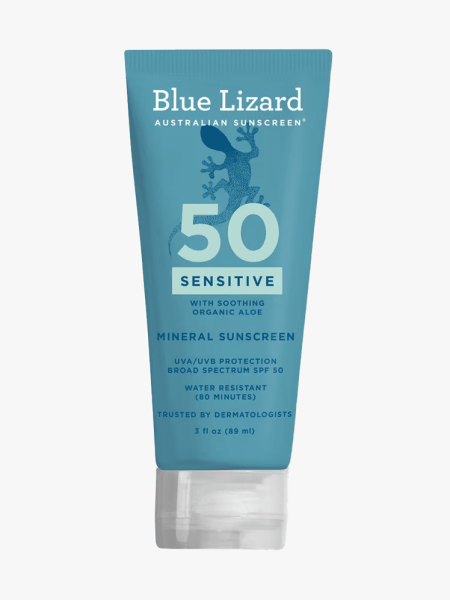
    Best for Body: Blue Lizard Sensitive Mineral Sunscreen Lotion SPF 50

    Blue Lizard Sensitive Mineral Sunscreen Lotion SPF 50 in branded tube component on a light gray backgroundSave to wishlistSave to wishlist

    Blue Lizard

    Sensitive Mineral Sunscreen Lotion SPF 50

    $11 $9 (18% off)

    Amazon

    $14

    Ulta Beauty

    Allure senior commerce director Shanna Shipin applying the Blue Lizard Sensitive Mineral Sunscreen Lotion SPF 50

    Shanna Shipin

    Why it's worth it: Blue Lizard has built its reputation on gentle, no-fuss formulas, and its Sensitive Mineral Sunscreen Lotion SPF 50+ is a perfect example. Zinc oxide and titanium dioxide handle the broad-spectrum sun protection, while soothing aloe and antioxidant vitamin E help keep skin feeling soft and comfortable. It also contains dimethicone, which helps lock in moisture and smooth over dry patches. Its thicker, more substantial texture feels especially comforting on skin from the neck down. "This is one of my favorite sunscreen recommendations for very sensitive and reactive skin types," says Nazanin Saedi, MD, a board-certified dermatologist based in East Norriton, Pennsylvania, who points to its fragrance-free formula and mineral UV filters as reasons it’s especially gentle, even for eczema-prone skin.

    Tester feedback from senior commerce director Shanna Shipin

    AccordionItemContainerButtonLargeChevron

    “This sunscreen can be used by everyone in my family: me with my dry skin, my daughters with their eczema-prone skin, and my husband with his extremely oily skin. It smooths over your body like a lotion, with some nice emollients and a ribbony feel‚ not like a typical chalky mineral sunscreen that you have to squeeze out of the bottle and rub into skin. Be warned: It will leave a white cast. That's not something I care about, and honestly, it alerts me to spots I've missed on myself or my kids, but it could be a dealbreaker for some people. Something I haven't loved is their rebrand—it's had no impact on the product performance, of course! But it's a bit stuffy-looking, and I preferred the playful and bright packaging of yore. The sunscreen is so good that I'll simply have to live with it, though!” —Shanna Shipin, senior commerce director

    More to know

    AccordionItemContainerButtonLargeChevron

    • Type: mineral
    • Key ingredients: 10% zinc oxide, 8% titanium dioxide, aloe, vitamin E, dimethicone
    • Tinted: no
    • Water-resistant: 80 minutes
    • Fragrance-free: yes
    • Who it’s for: everyone

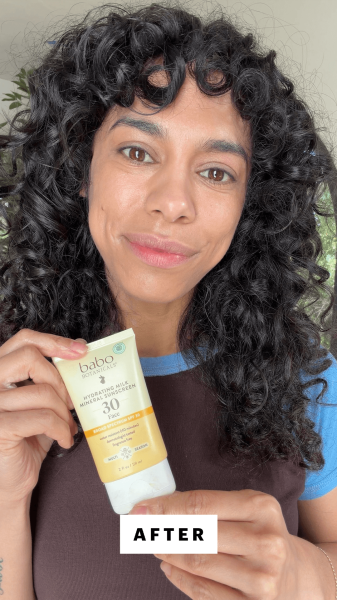
    Best for Whole Family: Babo Botanicals Daily Sheer Mineral Sunscreen Fluid SPF 50

    Babo Botanicals Daily Sheer Mineral Sunscreen Fluid SPF 50 in branded component on a light gray backgroundSave to wishlistSave to wishlist

    Babo Botanicals

    Daily Sheer Mineral Sunscreen Fluid SPF 50

    $24

    Amazon

    $24

    Shop

    Shipin applying the Babo Botanicals Daily Sheer Mineral Sunscreen Fluid SPF 50

    Shanna Shipin

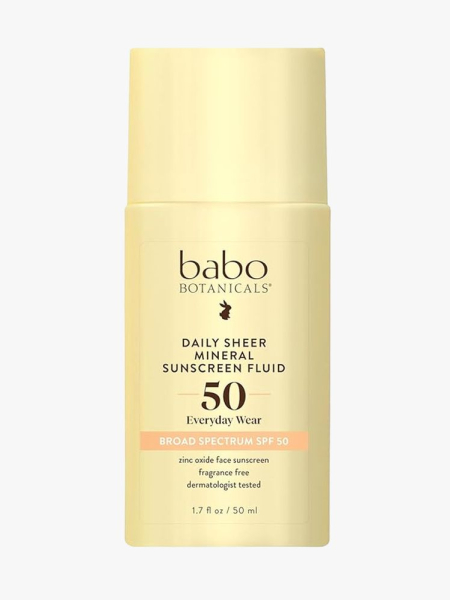
    Why it's worth it: Ever wondered why the brand is called Babo? The answer is surprisingly cute: It was the name of the founder’s son’s beloved stuffed bunny—perfectly in line with a line built around gentle, plant-based skin care for the whole family. Babo Botanicals’ Daily Sheer Mineral Sunscreen Fluid SPF 50 packs a hefty 20.6% zinc oxide for reliable, broad-spectrum protection, yet it avoids that telltale chalkiness (even if it does take a minute to fully rub in). You can thank polyhydroxystearic acid—which keeps the zinc evenly dispersed so it glides on in a sheer, fluid layer—along with iron oxides that help subtly neutralize any white cast. For extra-sensitive skin, the formula layers in soothing support with aloe, calendula, and chamomile extracts, plus bisabolol to help calm visible redness—making it a solid option for those dealing with conditions like eczema. A blend of maracuja, raspberry seed, and sunflower oils gives the formula that light, almost serum-like slip—so it glides on easily, wears well under makeup, and feels far more elegant than you’d expect from a high-zinc mineral SPF.

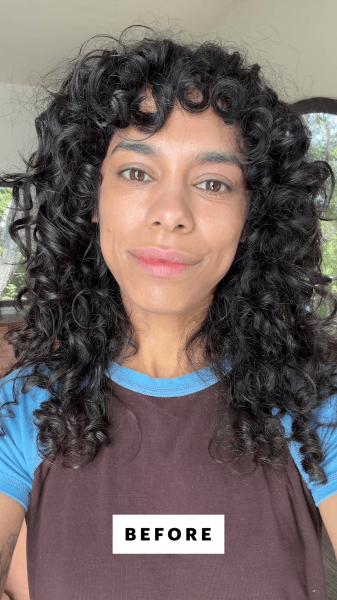
    Image may contain Daya Vaidya Black Hair Hair Person Adult Face Head Photography Portrait Cosmetics and Lipstick

    Shipin before applying the Babo Botanicals Daily Sheer Mineral Sunscreen Fluid SPF 50

    Image may contain Adult Person Bottle Lotion Face Head Photography Portrait Body Part Finger Hand and Black Hair

    Shipin after applying the Babo Botanicals Daily Sheer Mineral Sunscreen Fluid SPF 50

    Tester feedback from Shipin

    AccordionItemContainerButtonLargeChevron

    “Love a brand that I can use for myself and on my kids, and Babo Botanicals makes great sensitive-skin-friendly products like this sunscreen that leaves no white cast and wears so comfortably on the skin. I love that the brand created it with all seasons in mind—even though I live in LA and there’s practically only one season here—but the point of that all-seasonality is that it’s comfortable to wear when it’s hot, when it’s cold, when it’s windy, when it’s dry—you get the picture. It leaves no white cast, hydrates my skin, and doesn’t pill under my makeup. Love it!” —Shanna Shipin, senior commerce director

    More to know

    AccordionItemContainerButtonLargeChevron

    • Type: mineral
    • Key ingredients: 20.6% zinc oxide, polyhydroxystearic acid, aloe, calendula, chamomile extracts, bisabolol, maracuja oil, raspberry seed oil, sunflower oil
    • Tinted: no
    • Water-resistant: no
    • Fragrance-free: yes
    • Who it’s for: everyone, even kids

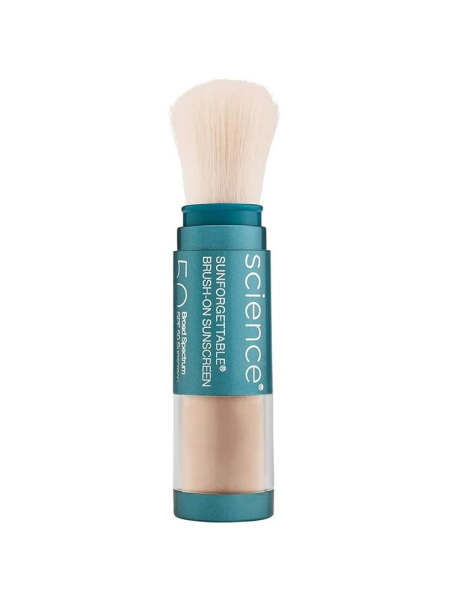
    Best Over Makeup: Colorescience Sunforgettable Total Protection Brush-On Shield SPF 50

    Colorescience Sunforgettable Total Protection Brush-On Shield SPF 50 teal vial of tinted powder sunscreen with beige brush on white backgroundSave to wishlistSave to wishlist

    Colorescience

    Sunforgettable Total Protection Face Shield Flex SPF 50

    $58

    Amazon

    $58

    Nordstrom

    $58

    Dermstore

    Why it's worth it: Let's be honest: Many of us aren't reapplying sunscreen every two hours, especially when we’re wearing makeup. If you don’t want to add a layer of lotion over your foundation—understandable—why not brush on your SPF instead? Colorescience’s Sunforgettable Total Protection Brush-On Shield SPF 50 packs 22.5% zinc oxide and 22.5% titanium dioxide into a convenient, portable brush, making touch-ups as easy as a quick dusting of setting powder. "This is my go-to sunscreen for reapplication during the day—it's always in my bag," says Dr. Saedi. The powder also helps absorb excess shine, which is handy for oily skin types, while hyaluronic acid and antioxidants like green tea extract provide additional skin-care benefits. Just be sure to apply it generously and evenly to get the labeled SPF 50 protection.

    More to know

    AccordionItemContainerButtonLargeChevron

    • Type: mineral
    • Key ingredients: 22.5% zinc oxide, 22.5% titanium dioxide, hyaluronic acid, grape seed extract, green tea extract, antioxidants (green tea extract, grape seed extract, sunflower sprout extract)
    • Tinted: yes (4 shades)
    • Water-resistant: 80 minutes
    • Fragrance-free: yes
    • Who it’s for: everyone, especially oily skin and people looking to easily reapply over makeup

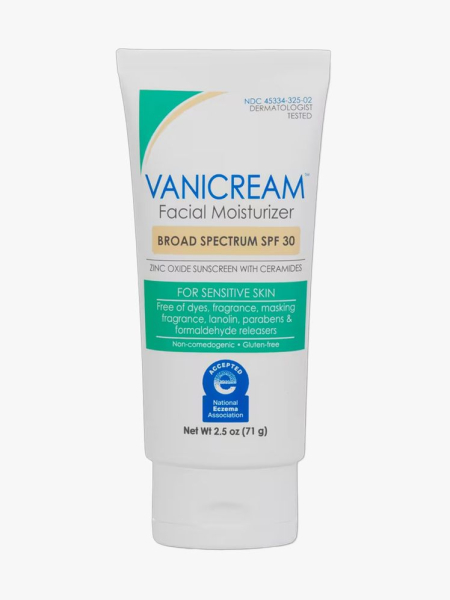
    Best for Eczema: Vanicream Facial Moisturizer with SPF 30

    Vanicream Facial Moisturizer with SPF 30 in branded tube component on a light gray backgroundSave to wishlistSave to wishlist

    Vanicream

    Facial Moisturizer with SPF 30

    $15 $14 (7% off)

    Amazon

    $20

    Ulta Beauty

    Why it's worth it: Dye-free, fragrance-free, lanolin-free, and grease-free, yet packed with everything your sensitive skin actually needs. Vanicream Facial Moisturizer SPF 30 pulls double duty as both sunscreen and daily moisturizer, so you can skip a separate hydrator without feeling deprived. It blends in easily, making it an effortless one-and-done step under makeup or on bare skin. “It’s non-comedogenic, so it’s safer for acne-prone skin to avoid clogged pores and breakouts, plus ceramides help keep your complexion hydrated,” says Gloria Lin, MD, a board-certified dermatologist based in New York City. The addition of glycerin in this drugstore SPF keeps your skin feeling soft and comfy without a greasy feel.

    More to know

    AccordionItemContainerButtonLargeChevron

    • Type: mineral
    • Key ingredients: 19.5% zinc oxide, ceramides, glycerin
    • Tinted: yes (universal tint)
    • Water-resistant: not disclosed
    • Fragrance-free: yes
    • Who it’s for: people with eczema or dry skin

    Frequently Asked Questions

    How can I benefit from sunscreen for sensitive skin?

    As we mentioned, people with sensitive skin can find it challenging to find a sunscreen that won't irritate them because of common irritants in chemical sun blockers. If that sounds like you, try a gentler mineral sunscreen.

    Even if you're not sensitive to every chemical in a chemical sunscreen, figuring out what makes your skin reactive is complicated. "Even if you identify which [kind of] product it is, you don't know which chemical it is [because] formulas typically contain up to four [photoprotective chemicals]," says board-certified dermatologist Corey L. Hartman, MD, based in Birmingham, Alabama. Thus, a mineral sunscreen with no chemicals rids you of the root issue.

    Another consideration is "to avoid mineral sunscreens that have parabens, phthalates, and added fragrances, as these can cause irritation, redness, and inflammation of the skin," Dr. Lamm notes. The lesson: Always read the ingredient list, especially as some sunscreens are hybrid formulas and contain physical and chemical UV filters.

    What's the difference between a chemical and a mineral sunscreen?

    Physical sunscreens (a.k.a. mineral) work by reflecting the UV rays off the skin. Conversely, Dr. Lamm explains that chemical-filter sun protection products work by absorbing the sun's rays that hit your skin rather than bouncing them off.

    Mineral-based products utilize, well, mineral filters like zinc oxide and titanium dioxide, which are usually gentler than chemical options. "Mineral sunscreens also typically do not irritate the eyes like chemical sunscreens," he says. Plus, they're photostable, so they don't need to be applied as regularly as chemical sunscreens, according to New York City-based, board-certified dermatologist Hadley King, MD.

    That's not to say people with sensitive skin can never use chemical sunscreen—it just may involve more trial and error to discern which (if any) ingredients spur adverse reactions. More important than anything, though, is to use any sunscreen—period. "My recommendation is to find a sunscreen you love, chemical or physical, and use it every single day," says Muneeb Shah, MD, a Wilmington, North Carolina-based, board-certified dermatologist. "Whichever sunscreen you love, as long as the SPF is [at least] 30, is the sunscreen for you."

    Meet the experts

    • Kristina Collins, MD, a double board-certified dermatologist based in Austin
    • Corey L. Hartman, MD, board-certified dermatologist and founder of Skin Wellness Dermatology based in Birmingham, Alabama
    • Hadley King, MD, a board-certified dermatologist based in New York City
    • Shari Marchbein, MD, a board-certified dermatologist based in New York City
    • Nazanin Saedi, MD, a board-certified dermatologist at Plymouth Meeting Dermatology based in East Norriton, Pennsylvania
    • Muneeb Shah, MD, a board-certified dermatologist based in Wilmington, North Carolina
    • Jane Yoo, MD, a dual board-certified dermatologist and Mohs surgeon based in New York City

    How we test and review products

    When Allure tests a product, our editors look at it from every angle in an effort to best serve you. We review ingredients, scrutinize brand claims, and, when necessary, examine peer-reviewed scientific and medical studies. In addition to testing each and every product that’s included in each and every review, we rely on experts who shape their fields, including dermatology, cosmetic chemistry, and medicine, to help us vet the ingredients and formulas.

    For our list of the best sunscreens for sensitive skin, we considered each product’s performance across five primary categories: product ingredients and efficacy, packaging, protection, texture, and product wear. Every product was determined to have excelled in each category by our editorial team, which is composed of in-house writers and editors as well as contributors — along with special consideration from dermatologists. To learn more information on our reporting and testing processes, read our complete reviews process and methodology page.

    Our staff and testers

    A beauty product is a personal purchase. You might be searching for a face cream to address persistent dryness or a new nail product to add to your Sunday self-care routine; you may simply be browsing around for the latest launches to hit the hair market. No matter what you seek or your individual needs and concerns, Allure wants to ensure that you love anything we recommend in our stories. We believe that having a diverse team of writers and editors—in addition to the wide range of outside testers and industry experts we regularly call upon—is essential to reaching that goal.

    After all, can we really say a skin-care product is the "best" for people over 50 if the only testers we’ve solicited opinions from folks who have yet to hit 30? Can we honestly deem a high-end diffuser worthy of your hard-earned cash if it’s never been tested on curls? We’re proud that our staff spans a wide range of ages, skin tones, hair textures, genders, and backgrounds, which means that we are able to fairly assess any beauty product that comes into the beauty closet.
  • Behind the Scenes at Allure’s Best of Beauty Live VIP Evening Event

    Behind the Scenes at Allure’s Best of Beauty Live VIP Evening Event

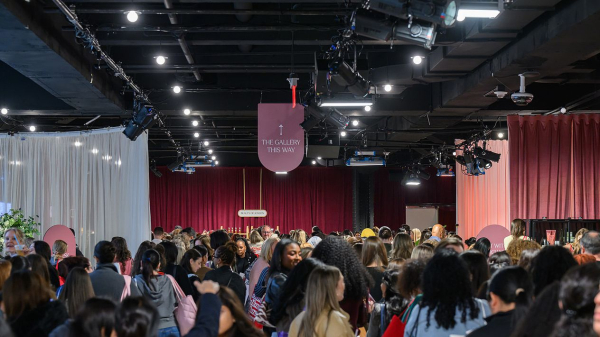
    The crowd at Allure's Best of Beauty Live Evening session.Photography by Sean SimeSave StorySave this storySave StorySave this story

    What’s better than one 30th birthday celebration? Two, duh. After a day filled with masterclasses, mingling, injectable appointments, and top-tier goodie bags at Allure’s Best of Beauty Live, the team did it all again for a nighttime session at Halo Twenty Eight in Manhattan’s Financial District.

    Starting at 5 p.m., editors, content creators, founders, and beauty insiders with impeccable beats descended upon the event space. They were greeted by eight servers with trays of full champagne flutes for the start of Allure’s Best of Beauty Live Evening session—an event I’m affectionately dubbing BoB After Dark. For two glorious hours, guests were able to indulge in an evening cocktail party with passed hors d’oeuvres, Silver Oak wines, and signature drinks like the vodka-based Rouge Affair and the Silver Oak martini, a gin-wine hybrid. “We’re having so much fun,” Joey Healy, creator of seven-time Best of Beauty winner Joey Healy Luxe Brow Powder, said as he walked through the crowd.

    Danessa Myricks taking a selfie with Dr. Rose Ingleton.

    Danessa Myricks and Dr. Rose Ingleton mid-selfie.

    Craig Barritt/Getty Images

    There was more product testing, sampling, and smelling, and gaming moments to be had from the 2026 Best of Beauty Awards winners—not to mention VIP-level gift bags valued at over $850. And just like the morning session, evening VIPs took home branded tote bags stuffed to the brim with select products from Allure’s 319 Best of Beauty Award winners, including Ouai Detox Shampoo, Heretic Parfum Black Salt, Wella Professionals Ultimate Repair 5-in-1 Protective Leave-In, Makeup By Mario Ethereal Eyes Palette, and Dr. Idriss Major Fade Flash Mask. Attendees were also invited to get ready at L’Oréal Paris’s glam station, followed by a trip down Allure’s red carpet.

    Jacqueline Kovalcin, 25, attended the later session with her sister, influencer Margaret Kiovalcin, and was especially excited about being in the same room as beauty industry innovators and founders—specifically Charlotte Palermino, founder of Dieux Skin, who she was able to meet and snag a photo with. “She’s a huge inspiration to me as someone who works in the skin-care industry,” Kovalcin says. “To be able to meet her was a dream come true. I would have never gotten that opportunity outside of the Allure live beauty event. It was literally the coolest night ever.”

    ArrowArrow

    Besides rubbing elbows with award-winning founders such as Palermino, Anastasia Soare, Danessa Myricks, and Octavia Morgan, attendees were also able to cozy up with two more renowned names in the industry: Botox Cosmetic and Juvéderm. With the purchase of a VIP+ ticket, select guests were given injectable appointments courtesy of SkinSpirit. A rep at the booth said they did almost 65 appointments throughout the day.

    At around 6pm, Allure’s editor in chief Jessica Cruel took the mic to address the crowd of eager, beauty-loving attendees. “We are really thrilled to celebrate all of the amazing brands that have won Best of Beauty this year, and all the industry leaders, and all the researchers, and all the supply-chain management people,” she said. “All of you deserve a big round of applause because it’s your work that gets the Best of Beauty seal.”

    Towards the end of the night, the teams in each booth were letting loose—the EltaMD section was particularly the place to be, with workers dancing up a storm to “I Love It” by Icona Pop and “Run The World (Girls)” by Beyoncé while handing out the brand’s award-winner, UV Clear Blemish-Prone & Oil Balancing SPF 50.

    Silver Oak wines.

    One Silver Oak Sauvignon Blanc, please.

    Craig Barritt/Getty Images

    The lines ebbed and flowed, but attendees seemed most excited to spin the wheel at the Allure Beauty Box station. The prizes included hefty discounts on subscriptions and also the opportunity to win a box themselves, which is a monthly assortment of curated products hand-picked by Allure editors. Avantika Vandanapu took a chance and won 40% off a box, while her guest ended up winning an entire beauty box for themselves. Lucky them.

    By 7pm, the Best of Beauty Live workers had to convince attendees to leave the floor. There seemed to be a consensus that no one was ready for the night to end. “It was my first Best of Beauty Live,” Kovalcin said, “but definitely not my last.”

    Allure's Best of Beauty LIVE 2026 is presented by Amazon Beauty and Allē with support from Beauty of Joseon, BOTOX® Cosmetic, DiamondGlow®, EltaMD Skin Care, JUVÉDERM®, KIKO Milano, La Roche-Posay, L'Oréal Paris, OLAY®, Secret, SkinMedica®, and Wella Professionals.

  • I’m Over Your Lip Gloss Phone Case

    I’m Over Your Lip Gloss Phone Case

    Image may contain Accessories Pendant Jewelry Locket Child and PersonGetty Images/Courtesy of DiorSave StorySave this storySave StorySave this story

    We should’ve known we hit peak beauty phone case in 2025 when Justin Bieber sang That’s my baby / She’s iconic / iPhone case / Lip gloss on it. To some, the lyrics are nonsensical, but tapped-in consumers know that he was talking about the Rhode Lip Case. Created by his wife Hailey Bieber for her beauty brand, the $38 silicone case not only protects your phone but also holds a tube of Rhode’s best-selling Peptide Lip Treatment. You’ve likely clocked the case in Mrs. Bieber’s many mirror selfies or spotted them gripped tightly in the hands of tweens walking, well, anywhere in downtown Manhattan.

    The phone case immediately went viral after launching in February 2024. The people of the internet—namely, the girlies—couldn’t get enough, matching it to their favorite lip shade and anticipating new colorways. For Rhode fans, it was a way to showcase allegiance to their favorite brand and its very famous and influential founder. An accessory that seemingly came out of nowhere, it changed the beauty merch game… and maybe not in a good way.

    Now, two years later, it’s not hard to find knockoffs that don’t exactly live up to Rhode’s creation. Temu and Shein are flooded with dupes in every color of the rainbow, and loads of brands have been inspired to create their own phone case-beauty product hybrids to, at best, try and replicate some of Rhode’s original magic or, at worst, reheat Bieber’s nachos into a stale soggy mess.

    Earlier this year, Daise Beauty launched a lip balm that sticks to the back of your phone like a Pop Socket, and just this past week two brands released similar concepts: Dior started selling a mini lip balm on their website and Charlotte Tilbury announced a mini setting powder, both of which adhere to the back of your phone. (Dior’s costs $95, Tilbury’s is free as a gift with purchase.) Fenty Beauty also collaborated with Casetify to create a case that holds both a tiny powder and a tiny lip gloss, resulting in a product so clunky it couldn’t possibly fit in a cute little purse, let alone someone’s pocket. There have likely been other gimmicky iterations thrust upon consumers since 2024, but none of them made enough of an impact to come to mind.

    Frankly, I’ve had enough of this landfill-bound, wasteful junk. Two years ago, Rhode did something novel, sure, but brands attempting to hitch a ride on Bieber’s coattails just to make a buck aren’t helping when it comes to overconsumption in the beauty industry—they’re only making it worse by attempting to create a new category of highly disposable products. (Although Bieber recently told Fortune she’s not interested in overconsumption, she is in the business of making products and selling them—including the current six colorways of the case.)

    According to Euromonitor International, almost 7.9 billion units of rigid plastic were created just for beauty and personal care products in the U.S. in 2018, and that was before the influx of charms, cases, merch, and other random accessories sold by the very beauty brands accumulating the bulk of the waste. (The global market is expected to grow by 5 percent annually until 2030, so that number is likely now even larger.) And even if your of-the-moment accessory ends up in the recycling bin, it may never be recycled: Only 9 percent of all plastic waste ever produced has actually been turned into something reusable.

    Not only are many of these items superfluous and a waste of both money and resources, but they also sound like a hygiene nightmare. Almost a decade ago, a study published in Time said our cell phones were ten times dirtier than most toilet seats—a stat I’m sure has multiplied over the past decade as people become even more glued to their miniature screens. (It was around that time that Dscout data uncovered that the average cell phone user touches their phone 2,617 times per day). So why, on God’s green Earth, would you purposely stick a beauty product onto the back of a filthy device just to then jam your finger into a formula you’re going to spread onto your mouth or over your skin? Phones can also heat up, so I can’t imagine a warm surface is a great environment for your products to rest on.

    Of the Daise stick-on, Allure associate social media manager Katie Gunderman says her amusement with the accessory was short-lived. “My initial thoughts were about how cute, fun, colorful, and potentially practical it was,” she explains. “After about a week of my phone being in my back pocket or jammed in my purse, it kept sliding open, collecting debris along the way. After that, there was no way I was applying it on my lips."

    That also begs the question: Does no one put their phone in their pocket anymore? How are we fitting an entire mini computer and a pressed powder in our already tight denim pouches? And while I know girl grip is impressive, the bigger these get, are they at all comfortable to hold?

    Every brand contributes to beauty’s waste problem, including Rhode, simply because they make products that don’t last forever. But at least the originators of the beauty phone case brought a level of intentionality to the product’s design. It’s more hygienic than a pot of sample-sized lip balm stuck on pop socket-style, and it pairs with a full-size product. The case, of course, can be used with however many lip treatments you go through in your phone’s—and thus your case’s— life cycle.

    I’m not seeing the same level of, we thought this one through! from other brands. But if I’m to aim my pitchfork at anyone—or anything—it’d be late-stage capitalism. Every aspect of our lives has been commodified, down to the charms that hang off of our handbags and the trinkets we attach to our handheld internet portals. We’ve all become walking billboards for brands whether you like it or not, and if you think about the amount of mirror selfies a branded phone case would appear in, we’re doing a lot of marketing legwork for free.

    The glut of phone accessories isn’t just unhygienic or jading—it’s exhausting to keep up with, and points to a dismal answer to the “is originality dead?” discourse pervading our feeds. To be clear, I’m not trying to be a hater. Of course we should be able to do whatever the hell we want with our beauty products and continue to implement the small, meaningful ways we express ourselves to the world. But maybe let’s keep them off of the devices—we probably don’t need more screentime anyway.

  • 12 Best La Roche-Posay Products for Dry, Sensitive Skin

    12 Best La Roche-Posay Products for Dry, Sensitive Skin

    Image contains an Allure editor surrounded by silos of the best La RochePosay productsCollage: Jemeria Davison; Source images: Courtesy of brandsSave StorySave this storySave StorySave this story

    If you have sensitive skin, the best La Roche-Posay products may already be in your skin-care routine. The French pharmacy favorite is practically synonymous with caring for easily irritated complexions, earning praise from dermatologists, Allure editors, and our Best of Beauty Awards judges alike. Its appeal? Effective formulas that don’t put reactive skin through the wringer, at prices that won’t make you feel guilty about loading up your cart.

    One mainstay ingredient is the brand's signature thermal spring water, sourced from the French town of La Roche-Posay. Naturally rich in selenium, an antioxidant mineral, it helps soothe stressed-out skin and is one reason the brand has become a go-to for sensitive complexions. But the brand is continuing to innovate, with a development that even longtime fans can get excited about—namely, the brand’s latest Anthelios sunscreen, which now features bemotrizinol (BEMT), the first new UV filter the FDA has approved in over 25 years. From gentle cleansers to barrier-friendly moisturizers, these are the La Roche-Posay products we keep coming back to.

    Our Top La Roche-Posay Products

    • Future Looks Bright: Anthelios UVDefense SPF 50 Sunscreen with BEMT, $40
    • Milky Way: Toleriane Moisturizing Milky Cleanser, $20
    • Bounce Back: Hyalu B5 Suractivated Face Cream, $40
    • Bright Idea: Mela B3 Dark Spot Corrector Serum, $45
    • Body Guard: Lipikar AP+Max Triple Repair Moisturizing Cream, $22

    Future Looks Bright: Anthelios UVDefense SPF 50 Sunscreen with BEMT

    La Roche-Posay Anthelios UVDefense Sunscreen SPF 50 on a light gray backgroundSave to wishlistSave to wishlist

    La Roche-Posay

    Anthelios UVDefense Sunscreen SPF 50

    $40

    Amazon

    $40

    La Roche-Posay

    Allure commerce editor Sarah Han applying the La Roche-Posay Anthelios UVDefense SPF 50 Sunscreen with BEMT

    Sarah Han

    Why it's worth it: Did you hear there’s a new FDA-approved sunscreen filter on the block? Meet bemotrizinol (BEMT), the first UV filter to get the green light in the US in over two decades—and the star of La Roche-Posay’s new Anthelios UVDefense SPF 50 Sunscreen. While BEMT has been used in European and other international sunscreens for years, American formulas have had to make do without it…until now. Unlike some older chemical filters that primarily protect against either UVA or UVB rays, BEMT tackles both, including the longer UVA wavelengths that contribute to premature skin aging. It's also photostable, meaning it doesn't readily break down in sunlight—and therefore helps you maintain protection while you're outdoors.

    Why is BEMT such a big deal? BEMT gives formulators more flexibility to create sunscreens with high levels of protection without relying on such heavy concentrations of UV filters, as Kelly Dobos, a cosmetic chemist based in Cincinnati, previously told Allure. Translation: It’s easier for them to create lightweight, less greasy formulas—even more so than the chemical sunscreens you might be used to—that you'll actually want to wear every day. And La Roche-Posay isn't stopping at sun protection. Anthelios UVDefense SPF 50 also features the brand's Cell-Ox Shield Technology, which combines BEMT with an antioxidant blend of lychee extract, alteromonas ferment, senna alata leaf extract, and vitamin E to help defend against free radicals generated by UV exposure and pollution. According to the brand, the formula fends off up to 80% of the skin-damaging molecules triggered by UVA rays, with antioxidant benefits that last up to 16 hours. And as for how it feels? Think lightweight, hydrating, and practically invisible on your skin.

    Tester feedback from commerce editor Sarah Han

    AccordionItemContainerButtonLargeChevron

    "La Roche-Posay does it again. I love sunscreens that are on the more fluid side—think serum-like textures—and the Anthelios UVDefense SPF 50 Sunscreen with BEMT clearly falls under that umbrella! Like everyone in the beauty world, I'm ecstatic about a new UV filter, but I'm also hoping *taps watch* that the next approval doesn't take another 36 years. (We need to keep up with our global counterparts who are light-years ahead!!) Anyway, back to this formula. It's so lightweight and elegant that it practically disappears on contact, especially when you're applying two finger lengths' worth (the standard guideline). I was a little extra for this particular demo and used three fingers, so it did take a beat longer to fully rub in. Either way, the formula feels like nothing on the skin—and outside of the depths of winter—my combo skin and I don't need a standalone moisturizer because this doubles as both! The finish is definitely not as glowy as the UVAir serum, but these days, I kind of prefer a more ‘natural’ and ‘balanced’ look." —Sarah Han, commerce editor

    More to know

    AccordionItemContainerButtonLargeChevron

    • Type: chemical
    • Key ingredients: 2% BEMT, 3% avobenzone, 5% octisalate, 6% octocrylene, 11% homosalate, Cell-Ox Shield technology (litchi extract, alteromonas, cassia senna alata, and vitamin E), glycerin, butylene glycol, dimethicone
    • Tinted: no
    • Water-resistant: no
    • Fragrance-free: yes

    Milky Way: Toleriane Moisturizing Milky Cleanser

    La Roche-Posay Toleriane Moisturizing Milky Cleanser light blue bottle of cleanser with pump cap on light gray background with red Allure Best of Beauty seal in the top right cornerSave to wishlistSave to wishlist

    La Roche-Posay

    Toleriane Moisturizing Milky Cleanser

    $20

    Amazon

    $20

    La Roche-Posay

    Han applying the La Roche-Posay Toleriane Moisturizing Milky Cleanser

    Sarah Han

    Why it's worth it: La Roche-Posay’s Toleriane Moisturizing Milky Cleanser is proof that sometimes less really is more. With just nine ingredients, the 2026 Allure Best of Beauty Award winner washes away makeup and daily buildup without compromising your skin’s moisture barrier. Glycerin helps skin hold onto hydration, while ethylhexyl palmitate, a featherlight emollient, gives the formula its milky slip. The fragrance-free cleanser also contains the brand’s signature thermal spring water to soothe sensitive skin, leaving your face feeling soft and comfortable. Our tester likes using it as the second step in her double-cleansing routine, after an oil-based cleanser has done the heavy lifting of removing makeup and sunscreen.

    Tester feedback from Han

    AccordionItemContainerButtonLargeChevron

    “La Roche-Posay is one of the few skin-care brands I recommend to just about anyone, especially those with sensitive and/or dry skin. While I don't fall into either category (I have combo skin), I like to keep my cleansers simple and non-stripping. This Toleriane Moisturizing Milky Cleanser does exactly that—and respects my barrier—thanks to a very minimal ingredient list featuring thermal spring water and glycerin. It always leaves my skin feeling baby-soft, which is important since it's the second step of my double-cleansing routine. The giant bottle size is a huge plus, too—more than enough to last me and my boyfriend many months, but even more convenient for families with kiddos.” —Sarah Han, commerce editor

    More to know

    AccordionItemContainerButtonLargeChevron

    • Key ingredients: glycerin, ethylhexyl palmitate, La Roche-Posay thermal spring water
    • Fragrance-free: yes

    Bounce Back: Hyalu B5 Suractivated Face Cream

    La Roche-Posay Hyalu B5 Suractivated Cream blue jar with white lid on light gray backgroundSave to wishlistSave to wishlist

    La Roche-Posay

    Hyalu B5 Suractivated Face Cream

    $40 $28 (30% off)

    Amazon

    $40

    La Roche-Posay

    Allure editorial assistant Jennet Jusu applying the La Roche-Posay Hyalu B5 Suractivated Face Cream

    Jennet Jusu

    Why it’s worth it: What do GLP-1 medications have to do with your moisturizer? More than you might think. “People who are on GLP-1s have new fine lines and wrinkles, brown spots, textural changes and roughness, and just have lost that glow,” says Ava Shamban, MD, a board-certified dermatologist in Los Angeles, previously told Allure. (It's unclear what's exactly driving these changes, although there's emerging evidence that GLP-1s decrease both collagen and moisture levels in skin.) To address that, La Roche-Posay actually specifically tested its Hyalu B5 Suractivated Serum and Face Cream together on people taking GLP-1s, who reported that their skin looked smoother, firmer, and more radiant. The cream packs three forms of hyaluronic acid, which attract and hold onto water, to give dehydrated skin a plumper, smoother appearance, while vitamin B5 (panthenol) and ectoin help reinforce the moisture barrier and soothe dryness. The brand also adds its signature thermal spring water for antioxidant benefits, plus adenosine to help soften the appearance of fine lines. And you certainly don’t need to be taking a GLP-1 to appreciate it—the rich, nourishing formula is a welcome pick-me-up for skin that’s lost a little of its bounce.

    Tester feedback from editorial assistant Jennet Jusu

    AccordionItemContainerButtonLargeChevron

    “My skin is super dry, and I prefer oils over creams. However, La Roche-Posay nailed it with this cream. It doesn't have a strong scent, and the texture is very smooth when I apply it. I've been using it consistently for about a month now, and I'm seeing the long-term benefits. My skin doesn't look, well, thirsty. I used to have dry spots, but now my skin feels much more supple and soft. I use it in the morning and at night.” —Jennet Jusu, editorial assistant

    More to know

    AccordionItemContainerButtonLargeChevron

    • Key ingredients: hyaluronic acid, vitamin B5 (panthenol), ectoin, glycerin, adenosine, La Roche-Posay thermal spring water
    • Fragrance-free: no

    Body Guard: Lipikar AP+MAX Triple Repair Moisturizing Cream

    La Roche-Posay Lipikar AP+MAX Triple Repair Moisturizing Body Cream in branded bottle component on a light gray backgroundSave to wishlistSave to wishlist

    La Roche-Posay

    Lipikar AP+Max Triple Repair Moisturizing Cream

    $23 $21 (9% off)

    Amazon

    $23

    La Roche-Posay

    Allure editor in chief Jessica Cruel applying the La Roche-Posay Lipikar AP+MAX Triple Repair Moisturizing Cream

    Jessica Cruel

    Why it’s worth it: When Allure’s editor in chief goes too long without using La Roche-Posay’s Lipikar AP+Max Triple Repair Moisturizing Cream, her skin practically demands it—by getting dry and itchy. And she’s not the only fan. “This is my favorite body moisturizer,” says Gloria Lin, MD, a board-certified dermatologist based in New York City. She recommends its blend of ceramides, shea butter, and glycerin for keeping dry, eczema-prone skin hydrated. For those who struggle with persistent itchiness, the latest version of the brand’s longtime favorite introduces proprietary Neurobioma technology to prevent the urge to scratch by targeting the interaction between the skin’s microbiome and the nerve signals involved in itching.

    Despite its thick, balm-like texture, “it absorbs so well that you can get dressed immediately—it leaves no residue,” says Debra Jaliman, MD, a board-certified dermatologist based in New York City. And it’s not just for your body, either: “Many of my prescription retinoid patients use this on their face and body during their acne treatment course to combat the dryness that can occur with their medication,” says Dr. Lin. She adds that it won’t clog pores, and it’s gentle enough for kids, too.

    Tester feedback from editor in chief Jessica Cruel

    AccordionItemContainerButtonLargeChevron

    “I am particular about body lotion. Just like Goldilocks: too thick and it's greasy, too thin and it's useless. This La Roche-Posay formula is just right. I find that it is moisturizing enough to quench my dry elbows and knees. Yet, it doesn't leave me feeling like I am going to slip and slide all over every surface I touch. There is no scent, so it's good for sensitive skin types. When I don't use it for a while, I can feel my dry, itchy skin begging for moisture. It's screaming ‘Lipikar, please!’” —Jessica Cruel, editor in chief

    More to know

    AccordionItemContainerButtonLargeChevron

    • Key ingredients: shea butter, glycerin, niacinamide, ceramides, La Roche-Posay thermal spring water
    • Fragrance-free: yes

    Light as Air: Anthelios UVAir SPF 50 Serum Sunscreen

    La Roche-Posay Anthelios UVAir SPF 50 Serum Sunscreen in branded component on a light gray backgroundSave to wishlistSave to wishlist

    La Roche-Posay

    Anthelios UVAir SPF 50 Serum Sunscreen

    $40 $30 (25% off)

    Amazon

    $43

    La Roche-Posay

    Jusu applying the La Roche-Posay Anthelios UVAir SPF 50 Serum Sunscreen

    Jennet Jusu

    Why it’s worth it: La Roche-Posay's UVAir SPF 50 Serum Sunscreen is the sunscreen for people who don't like sunscreen. A recent addition to the dermatologist-loved Anthelios family, this chemical formula has a lightweight, breathable texture that feels more like your favorite serum. Like other sunscreens in the Anthelios lineup, it features the brand's Cell-Ox B3 Shield Technology, which pairs UV protection with antioxidant-rich senna alata leaf extract to help defend against free-radical damage caused by sun exposure. There's also niacinamide to help even out discoloration, plus glycerin and hyaluronic acid to draw in moisture and keep skin hydrated. And while its easy-to-spread texture might tempt you to apply just a few drops like you would a regular serum, remember that it's still sunscreen—so stick to the two-finger rule to make sure you're getting adequate protection.

    Tester feedback from Jusu

    AccordionItemContainerButtonLargeChevron

    “It feels very milky to me and smooth when I apply it. I've noticed its long-lasting impact now that summer's over. I have dry spots and hyperpigmentation, but paired with the La Roche-Posay moisturizer, it's been saving my skin. Thankfully, it goes a long way, and I always apply it to my neck and the backs of my hands.” —Jennet Jesu, editorial assistant

    More to know

    AccordionItemContainerButtonLargeChevron

    • Type: chemical
    • Key ingredients: 3% avobenzone, 7% homosalate, 5% octisalate, 7% octocrylene, niacinamide, glycerin, hyaluronic acid, vitamin E, senna alata leaf extract
    • Tinted: no
    • Water-resistant: no
    • Fragrance-free: yes

    Easy on the Eyes: Toleriane Dermallergo Eyes

    La Roche-Posay Toleriane Dermallergo Eyes in branded component on a light gray backgroundSave to wishlistSave to wishlist

    La Roche-Posay

    Toleriane Dermallergo Eyes

    $30

    Amazon

    $30

    La Roche-Posay

    Allure beauty director Sarah Kinonen applying the La Roche-Posay Toleriane Dermallergo Eyes

    Sarah Kinonen

    Why it's worth it: Ever notice how the skin around your eyes seems to get irritated before the rest of your face? That's because it's some of the thinnest skin on your body, making it especially vulnerable to dryness and sensitivity. Enter La Roche-Posay’s Toleriane Dermallergo Eyes. Formerly known as Toleriane Ultra Eyes, this fragrance-free eye cream focuses on what sensitive skin needs most: soothing hydration, barrier support, and relief from discomfort.

    Glycerin, squalane, and shea butter soften dry, tight skin and prevent moisture loss, while niacinamide reinforces the skin barrier and evens out discoloration. There's also Neurosensine, a synthetic peptide that helps ease uncomfortable sensations like stinging, burning, and tightness, plus the brand’s thermal spring water to ease redness. And even if you can't keep track of all those nourishing ingredients, you'll appreciate how silky and comforting the formula feels without feeling heavy.

    Tester feedback from beauty director Sarah Kinonen

    AccordionItemContainerButtonLargeChevron

    “I loveee an eye cream, but my easily irritated undereyes? Not so much. So whenever that thin-skinned area is feeling a little sensitive (usually after a long day in contacts and shimmer eye shadow), I like to swap out my crow's feet-fighting formulas for something a little more soothing, like the La Roche-Posay Toleriane Dermallergo Eye Cream. It's super lightweight, instantly seeps into the skin, and is jam-packed with calming and hydrating ingredients, like niacinamide and the brand's own thermal water. Because it's so lightweight, it layers well over serum and under moisturizer (and sunscreen!) and wears well with makeup. Usually, though, if I'm wearing this, my skin is in Reset Mode, so makeup is usually minimal.” —Sarah Kinonen, beauty director

    More to know

    AccordionItemContainerButtonLargeChevron

    • Key ingredients: glycerin, squalane, shea butter, niacinamide, Neurosensine (acetyl dipeptide-1 cetyl ester), La Roche-Posay thermal spring water
    • Fragrance-free: yes
    • Ophthalmologist-tested: yes

    Sheer Genius: Anthelios Mineral Ultra Light Sunscreen SPF 50

    La Roche-Posay Anthelios Mineral Ultra-Light Sunscreen Fluid SPF 50 white rectangular bottle of sunscreen with orange label and white cap to the right side on white backgroundSave to wishlistSave to wishlist

    La Roche-Posay

    Anthelios Mineral Ultra Light Sunscreen SPF 50

    $43

    Amazon

    $43

    La Roche-Posay

    Allure contributing commerce editor Deanna Pai applying the La Roche-Posay Anthelios Mineral Ultra Light Sunscreen SPF 50

    Deanna Pai

    Why it's worth it: Sunscreen can be a tricky step, particularly for sensitive skin: The wrong formula can cause more irritation, but skipping SPF altogether can (obviously) make things worse. That’s why Anthelios Mineral Ultra Light Sunscreen SPF 50 is a standout with both titanium dioxide and zinc oxide to gently reflect UV rays, while vitamin E and thermal spring water help soothe and protect against free radicals. Its silky, fast-absorbing texture sinks in instantly and “it has a subtle mattifying effect that’s perfect to wear under makeup,” says Shari Marchbein, MD, a board-certified dermatologist based in New York City.

    Tester feedback from contributing commerce editor Deanna Pai

    AccordionItemContainerButtonLargeChevron

    “I don't typically trust untinted mineral sunscreens, since they almost always leave a white cast on my olive skin. Not La Roche-Posay Anthelios! It's practically perfect: It doesn't have a weird scent, absorbs quickly, and even seems to control the shine on my nose, leaving my very oily T-zone looking more matte, but not flat or one-dimensional. The tube also holds a ton of product, too, so it can last me through a beach trip and then some.” —Deanna Pai, contributing commerce editor

    More to know

    AccordionItemContainerButtonLargeChevron

    • Type: mineral
    • Key ingredients: 6% titanium dioxide, 5% zinc oxide, vitamin E, La Roche-Posay thermal spring water
    • Tinted: no
    • Water-resistant: 40 minutes
    • Fragrance-free: yes

    Bounce Back: Hyalu B5 Pure Hyaluronic Acid Serum

    La Roche-Posay Hyalu B5 Pure Hyaluronic Acid Serum in branded component on a light gray backgroundSave to wishlistSave to wishlist

    La Roche-Posay

    Hyalu B5 Pure Hyaluronic Acid Serum

    $40

    Amazon

    $54

    La Roche-Posay

    Allure commerce producer Sarah Hoffmann applying the La Roche-Posay Hyalu B5 Pure Hyaluronic Acid Serum

    Sarah Hoffmann

    Why it's worth it: Hyaluronic acid has become a must-have ingredient for many of us in the quest for supple, glowy, hydrated skin. “[Two forms of] pure hyaluronic acid locks in moisture, madecassosides—which are wound-healing agents derived from Centella asiatica—nourish your skin barrier, and vitamin B5 soothes and hydrates,” says Alexandra Bowles, MD, a board-certified dermatologist based in Cincinnati, OH. The lightweight gel texture sinks in fast, leaving skin plump, smooth, and dewy. Deanne Mraz, MD, a board-certified dermatologist based in Connecticut, previously told Allure that, regardless of your skin type, this product is a great starting point if you’re new to serums.

    Tester feedback from commerce market editor Sarah Hoffmann

    AccordionItemContainerButtonLargeChevron

    “There are few skin issues in my life that a good hyaluronic acid serum can't fix. Dry patches? Hyaluronic acid. Dull skin? Hyaluronic acid. Clogged pores? You wouldn't think it, but hyaluronic acid genuinely helps balance my skin so it's not producing the excess oil that pisses my pores off. La Roche-Posay's Hyalu is the platonic ideal of an HA serum to me: medium viscosity, non-sticky, and vaguely aquatic-smelling. My skin is always better off when I make the time to stack it in ahead of moisturizer.” —Sarah Hoffmann, commerce market editor

    More to know

    AccordionItemContainerButtonLargeChevron

    • Key ingredients: hyaluronic acid, madecassoside, glycerin, vitamin B5, La Roche-Posay thermal spring water
    • Fragrance-free: no

    Bright Idea: Mela B3 Dark Spot Corrector Serum

    La Roche-Posay Mela B3 Dark Spot Corrector Serum in branded drip component on a light gray backgroundSave to wishlistSave to wishlist

    La Roche-Posay

    Mela B3 Dark Spot Corrector Serum

    $45

    Amazon

    $45

    La Roche-Posay

    Allure contributing commerce writer Christa Joanna Lee applying the La Roche-Posay Mela B3 Serum

    Christa Joanna Lee

    Why it's worth it: If you’re dealing with uneven tone, dark spots, or hyperpigmentation from breakouts, Mela B3 Serum has you covered with its silky, lightweight formula that pairs 10% niacinamide—to calm and strengthen the skin barrier—with a brightening molecule called melasyl. “This novel pigment-fighting molecule has demonstrated promising results for multiple skin concerns in clinical studies,” Rebecca Marcus, MD, a board-certified dermatologist based in Dallas, previously told Allure. To top it off, lipohydroxy acid (LHA), a gentle exfoliant, helps sweep away dead skin cells for instant radiance and a more even-looking complexion over time.

    Tester feedback from contributing commerce writer Christa Joanna Lee

    AccordionItemContainerButtonLargeChevron

    “Since I already use prescription tretinoin every other night (or sometimes every three nights), I like having a gentler brightening option for my days off. La Roche-Posay's Mela B3 Serum does contain retinyl palmitate, a milder vitamin A derivative that converts into retinoic acid in the skin, but it's pretty far down the ingredient list. What I love most so far is how moisturizing it feels. You can really tell there's a generous amount of glycerin in the formula: It's slightly thicker and more viscous than most serums I've tried, and takes a few minutes to fully absorb. I still need to give it a few more months to see how much of a difference it makes on my dark spots and melasma, but in the meantime, I'm enjoying it just as much for its hydrating benefits.” —Christa Joanna Lee, contributing commerce writer

    More to know

    AccordionItemContainerButtonLargeChevron

    • Key ingredients: melasyl, niacinamide, retinyl palmitate, lipohydroxy acid (LHA)
    • Fragrance-free: yes

    Barrier Boss: Toleriane Double Repair Face Moisturizer

    La Roche-Posay Toleriane Double Repair Face Moisturizer in branded tube component on a light gray backgroundSave to wishlistSave to wishlist

    La Roche-Posay

    Toleriane Double Repair Face Moisturizer

    $25

    Amazon

    $25

    La Roche-Posay

    Allure shopping director Shanna Shipin applying the La Roche-Posay Toleriane Double Repair Face Moisturizer

    Shanna Shipin

    Why it's worth it: If your skin’s barrier has been through it (think dryness, irritation, or over-exfoliation), La Roche-Posay’s Toleriane Double Repair Face Moisturizer is what our tester referred to as an “emotional support moisturizer.” It strengthens and hydrates with ceramides to help restore the skin’s natural barrier and thermal water to soothe and rebalance. Niacinamide helps calm redness and even out tone, while glycerin provides up to 48 hours of hydration without leaving a heavy residue. The lightweight cream sinks in fast, leaving skin soft, smooth, and comforted—perfect under makeup or on its own. If you have oily skin and prefer a matte option, Martha Viera, MD, a board-certified dermatologist in Coral Gables, FL, previously recommended the La Roche-Posay Toleriane Double Repair Matte Moisturizer.

    Tester feedback from senior commerce director Shanna Shipin

    AccordionItemContainerButtonLargeChevron

    “It's up there with Aquaphor as a product that I can trust to perform no matter how dry or damaged my skin barrier is. It doesn't go big on fancy fine-line-reducing ingredients or anything, and instead focuses on hydration. It leaves my skin wrapped in a cocoon of moisture—but not the overbearing and itchy kind! It plays nicely with my angry eczema flare-ups, and has no fragrance, so I can use it on my kids too.” —Shanna Shipin, senior commerce director

    More to know

    AccordionItemContainerButtonLargeChevron

    • Key ingredients: ceramides, niacinamide, glycerin, La Roche-Posay thermal spring water
    • Fragrance-free: yes

    Dull Skin, Where?: Pure Vitamin C12 Serum

    An orange and white dropper bottle of La Roche-Posay Pure Vitamin C12 Serum on a light gray backgroundSave to wishlistSave to wishlist

    La Roche-Posay

    Pure Vitamin C12 Serum

    $45

    Amazon

    $45

    La Roche-Posay

    Allure social media director Kassidy Silva applying La Roche-Posay Pure Vitamin C12

    Kassidy Silva

    Why it's worth it: In case you've been living under a rock, vitamin C has long been a gold standard for skin brightening. To sum things up, it's a powerful antioxidant that inhibits melanin production (which leads to dark spots and discoloration), defends against free radicals (which speed up signs of aging, like fine lines), and encourages collagen production for plumper, firmer skin. La Roche-Posay's Pure Vitamin C12 Serum is formulated with 12% L-ascorbic acid to address all of the above. The beloved brightener is flanked by salicylic acid and hyaluronic acid, as well as the brand's signature thermal spring water, for additional pore-refining, hydrating, and soothing benefits that we can't get enough of.

    Tester feedback from social media director Kassidy Silva

    AccordionItemContainerButtonLargeChevron

    “To say I'm picky in my beauty routine is an understatement. I never hesitate to throw a product in the bin if I see no results after a month, and I tested seven other serums before finding my beloved La Roche-Posay Vitamin C12. It's simply a cut above the rest. I use about a quarter-size drop each morning after cleansing and toning. I quickly swipe it across my face and make sure to work the product down my neck (forgetting my décolletage was a skin-care mistake I made for too long), finishing with a gentle pat to any spots I might have missed. Typically I wait about two minutes for it to dry and finish with a moisturizer before starting my makeup routine. After two months, it's helped bring the luminosity back to my skin and smoothed out the texture, especially around my nose.” —Kassidy Silva, social media director

    More to know

    AccordionItemContainerButtonLargeChevron

    • Key ingredients: 12% pure vitamin C, salicylic acid, hyaluronic acid, Neurosensine (acetyl dipeptide-1 cetyl ester)
    • Fragrance-free: yes

    Seeking Calm: Cicaplast Balm B5

    La Roche-Posay Cicaplast Balm B5 white tube on light grey backgroundSave to wishlistSave to wishlist

    La Roche-Posay

    Cicaplast Balm B5

    $33

    Amazon

    $33

    La Roche-Posay

    Han applying the La Roche-Posay Cicaplast Balm B5

    Sarah Han

    Why it's worth it: Oh, La Roche-Posay Cicaplast Balm B5, the crown jewel of rich creams. As its name suggests, two key ingredients are cica—more specifically, a form called madecassoside—and vitamin B5 (a.k.a. panthenol) to seriously soothe redness, irritation, and above all, dryness. Multiple derms have recommended this formula as a barrier repair cream, including one suitable for people with rosacea. TL;DR Dull, damaged skin trembles at the sight of this nongreasy, semi-matte cream that dries down beautifully and without any heaviness.

    Tester feedback from Han

    AccordionItemContainerButtonLargeChevron

    “My first impression was: a balm? That must be way too heavy. The plot twist? Cicaplast is more akin to a rich cream, and not greasy-feeling at all—especially after a few minutes have passed. It does take a bit longer to sink in and blend, but it dries down to a semi-matte, velvety finish I barely notice. This is definitely more of a nighttime cream for me—I sometimes even skip my toner/essence steps, so it's just double-cleanse, a retinol and/or hydrating serum, and Cicaplast. That's the simplest my p.m. routine has ever been, and honestly, I'm not mad at it. It's so moisturizing that I still feel the benefits—a.k.a. baby-soft skin—come morning.” —Sarah Han, commerce editor

    More to know

    AccordionItemContainerButtonLargeChevron

    • Key ingredients: cica, shea butter, panthenol, glycerin, La Roche-Posay thermal spring water
    • Fragrance-free: yes

    Frequently Asked Questions

    Meet the experts

    • Alexandra Bowles, MD, a board-certified dermatologist based in Cincinnati, Ohio
    • Debra Jaliman, MD, a board-certified dermatologist based in New York City
    • Gloria Lin, MD, a board-certified dermatologist at Schweiger Dermatology based in New York City
    • Shari Marchbein, MD, a board-certified dermatologist based in New York City
    • Rebecca Marcus, MD, a board-certified dermatologist at North Dallas Dermatology based in Dallas, Texas
    • Deanne Mraz, MD, a board-certified dermatologist and president and co-founder of Modern Dermatology based in Westport, Connecticut
    • Ava Shamban, MD, a board-certified dermatologist in Los Angeles
    • Martha Viera, MD, a board-certified dermatologist in Coral Gables, Florida

    How we test and review products

    When Allure tests a product, our editors look at it from every angle in an effort to best serve you. We review ingredients, scrutinize brand claims, and, when necessary, examine peer-reviewed scientific and medical studies. In addition to testing each and every product that's included in each and every review, we rely on experts who shape their fields, including dermatology, cosmetic chemistry, and medicine, to help us vet the ingredients and formulas.

    For our list of the best La Roche-Posay products, we considered each product's performance across five primary categories: product ingredients and efficacy, packaging, fragrance, texture, and product wear. Every product was determined to have excelled in each category by our editorial team, which is composed of in-house writers and editors as well as contributors—along with special consideration from board-certified derms and K-beauty experts. To learn more information on our reporting and testing processes, read our complete reviews process and methodology page.

    Our staff and testers

    A beauty product is a personal purchase. You might be searching for a face cream to address persistent dryness or a new nail product to add to your Sunday self-care routine; you may simply be browsing around for the latest launches to hit the hair market. No matter what you seek or your individual needs and concerns, Allure wants to ensure that you love anything we recommend in our stories. We believe that having a diverse team of writers and editors—in addition to the wide range of outside testers and industry experts we regularly call upon—is essential to reaching that goal.

    After all, can we really say a skin-care product is the "best" for people over 50 if the only testers we've solicited opinions from folks who have yet to hit 30? Can we honestly deem a high-end diffuser worthy of your hard-earned cash if it's never been tested on curls? We're proud that our staff spans a wide range of ages, skin tones, hair textures, genders, and backgrounds, which means that we are able to fairly assess any beauty product that comes into the beauty closet.
  • 6 Best Lip Liners for Mature Skin, According to Makeup Artists

    6 Best Lip Liners for Mature Skin, According to Makeup Artists

    A collage of lip liner pencils and scribbles on a peachypink backgroundCollage: Jemeria Davison; Source images: Courtesy of brandsSave StorySave this storySave StorySave this story

    As your lips change with age, so should your makeup. That's where upgrading to the best lip liners for mature skin comes in: Paired with a good lipstick for older women, they can help restore definition, create the appearance of fuller lips, and keep color from feathering into fine lines around the mouth. “They’re the underrated MVP of the lip category,” says LA-based makeup artist Fiona Stiles. “They can help define your shape and maximize it while also giving your lip color more staying power.”

    While many of us tend to focus on how our facial skin changes over time—leading to a newfound demand for targeted moisturizers and serums for aging skin—the lips get overlooked. But they have a naturally impaired skin barrier and few to no oil glands, so aging can be uniquely tough on them. “Structurally, the lips lose volume, and the border of the lips loses definition,” says Joshua Zeichner, MD, a board-certified dermatologist in New York City. Not only that, but "the lips often become dry and the skin barrier becomes weaker as we get older,” he adds.

    Our Top Lip Liners for Mature Skin

    • Best Overall: Charlotte Tilbury Lip Cheat Long Lasting Waterproof Liner, $28
    • Best Drugstore: L’Oréal Paris Blurfiller Blurring Lip Contour, $13
    • Best Longwear: Huda Beauty Lip Contour Lip Stain, $25
    • Best for Color Range: MAC Creamy Lip Liner, $25

    Frequently Asked QuestionsAccordionItemContainerButtonLargeChevron

    • How should you apply lip liner on mature lips?
    • How do you keep lipstick from bleeding on older skin?
    • Is lip liner good for mature lips?
    • Meet our experts
    • How we test and review products
    • Our staff and testers

    That means formulas that drag or settle into lines can make those changes more noticeable. Instead, look for a lip liner that glides on smoothly but has enough grip to keep color from migrating beyond the lip line. You want to choose one that has staying power, but also isn’t too drying,” says New York City–based celebrity makeup artist Kirin Bhatty.

    Luckily, that no longer limits you to a classic pencil. Today’s options include nude lip liners that look like your lips but better, long-wearing stains, and chubby contour sticks that can softly bring back volume you’ve lost. Ahead, we found the best lip liners for mature lips, with expert-approved picks that make defining your shape a whole lot easier.

    Best Overall: Charlotte Tilbury Lip Cheat Long Lasting Waterproof Lip Liner

    Charlotte Tilbury Lip Cheat Long Lasting Waterproof Lip Liner in branded component on a light gray backgroundSave to wishlistSave to wishlist

    Charlotte Tilbury

    Lip Cheat Long Lasting Waterproof Lip Liner

    $28

    Nordstrom

    $28

    Ulta Beauty

    $28

    Sephora

    Why it’s worth it: There’s a reason this pencil has become a makeup bag staple. Charlotte Tilbury’s Lip Cheat Long Lasting Waterproof Lip Liner nails the trifecta with a comfortable formula, impressive staying power and shade range that makes finding a natural-looking match refreshingly easy. The formula, which can glide onto skin without skipping, is especially helpful for mature lips. “The texture is beautiful,” says Bhatty. “It's not dry but not too creamy, so it wears really well.”

    Hyaluronic acid and jojoba oil, which hydrate and moisturize, give the pencil that slip. Then comes polybutene, which is “a flexible film former that helps prevent feathering and smudging by locking pigments in place,” explains Kelly Dobos, a cosmetic chemist in Cincinnati. That means your color will stay in place even through multiple cups of iced coffee. We’re partial to the brand’s iconic Pillow Talk family, which includes four takes on the original rosy-nude shade.

    More to know

    AccordionItemContainerButtonLargeChevron

    • Key ingredients: hyaluronic acid, jojoba seed oil, ceresin
    • Shades: 19

    Best Drugstore: L’Oréal Paris Blurfiller Blurring Lip Contour

    L’Oreal Blurfiller Blurring Lip Contour in branded component on a light gray backgroundSave to wishlistSave to wishlist

    L'Oréal Paris

    Blurfiller Blurring Lip Contour

    $13

    Amazon

    $13

    Ulta Beauty

    Why it’s worth it: Lip shape can subtly change over time. “We lose not only volume in our lips as we age, but also the vermilion border, which is your visible lip line, tends to fade,” says Stiles. Enter L’Oréal Paris Blurfiller Blurring Lip Contour, a twist-up crayon that brings definition back into the picture without requiring a super-precise application (or your reading glasses).

    The namesake blurring effect of this lip liner is especially forgiving with hydrated silica that "scatters and diffuses light to soften the appearance of fine lines and texture,” says Dobos. Combined with waxes, these ingredients create a soft-focus effect that makes lip contours appear naturally defined. The formula is effectively doing some of the blending for you, which is exactly why it appeals to Bhatty, who finds it so hydrating that she sometimes uses it all over the lips.

    More to know

    AccordionItemContainerButtonLargeChevron

    • Key ingredients: dimethicone, hydrated silica, beeswax
    • Shades: 8

    Best Longwear: Huda Beauty Lip Contour Lip Stain

    Huda Beauty Lip Contour Lip Stain for 12-Hour Wear in branded component on a light gray backgroundSave to wishlistSave to wishlist

    Huda Beauty

    Lip Contour Lip Stain for 12-Hour Wear

    $25

    Shop

    $25

    Sephora

    Why it’s worth it: If your lipstick seems to vanish somewhere between your morning coffee and lunch, Huda Beauty Lip Contour Lip Stain offers a different strategy. It's powered by a polymer that creates a lightweight, flexible film on the lips. “That film helps anchor the colorants to the lip surface,” says Dobos, who adds that this contributes to the product's transfer-resistant and long-wearing properties. The staining effect, she explains, comes from water-soluble dyes that tint the outer layers of the lips rather than simply sitting on top like traditional solid pigments.

    The felt-tip applicator glides without tugging or skipping, making it easy to trace your natural lip shape or subtly enhance it. One thing to note: Store the pen cap side down to help keep the formula from drying out. As for the payoff, “The stain lasts for hours and doesn’t fade when a gloss or balm is added into the mix as a wax-based liner can,” says Stiles, who especially loves the shade Rosewood. “It’s a perfect muted rose that feels like it’s enhancing my vermillion border."

    More to know

    AccordionItemContainerButtonLargeChevron

    • Key ingredients: aloe, argan oil
    • Shades: 11

    Best Shade Range: MAC Cosmetics Creamy Lip Liner

    MAC Creamy Lip Liner in branded component on a light gray backgroundSave to wishlistSave to wishlist

    MAC

    Creamy Lip Liner

    $25

    Nordstrom

    $25

    Ulta Beauty

    $25

    Sephora

    Why it’s worth it: Whether you’ve been rocking lip liner for years or just started wearing it, one thing reigns true: MAC lip pencils are the GOAT when it comes to the shade range. With more than 28 shades spanning neutrals, pinks, reds, browns, and other statement-makers, MAC Cosmetics Creamy Lip Liner offers the kind of collection that allows you to match your liner to your lipstick, instead of trying to make one beige pencil do everything. “They are so saturated in color, and they have a beautiful opacity,” says Bhatty, who regularly restocks this classic in her kit. That intensity makes it especially useful when you're wearing a more dramatic lip and want the liner to pull its weight as part of the finished look.

    The texture does run slightly drier than some of the other picks here, so give lips a little prep with a hydrating balm before application. For anyone who likes a true red lip, berry, plum, or any color that demands a precise match, the selection is unparalleled.

    More to know

    AccordionItemContainerButtonLargeChevron

    • Key ingredients: C10-18 Triglycerides, japan fruit wax, vitamin e
    • Shades: 36

    Best Lip Liner Stain: Sacheu Peel-Off Lip Liner Stayn

    Sacheu Peel-Off Lip Liner Stayn in branded component on a light gray backgroundSave to wishlistSave to wishlist

    Sacheu

    Peel-Off Lip Liner Stayn

    $14

    Shop

    $14

    Ulta Beauty

    $14

    Revolve

    Why it’s worth it: Sacheu Peel-Off Lip Liner Stayn, which you apply and then peel off once it sets, made its way to TikTok virality—but it’s not just a gimmick. “They have good colors and the product stays on for ages,” says Stiles. While the peel-off application may feel like it was built for social media, it may have some functional benefit, too. “Because the film stays in place while the dyes are depositing, it can help create a more even stain and reduce the chance of immediate smudging or bleeding beyond the lips,” says Dobos.

    There is a slight learning curve, though. You'll want to apply a generous, even layer and give it enough time—about five to seven minutes—to set before peeling it away. (Stiles recommends applying it at the beginning of your makeup routine so the stain has plenty of time to develop.) Once you peel it off, soften the resulting line with your finger or a brush for a more diffused finish. The result is a wash of color that can act as a subtle lip contour on its own or as a base underneath lipstick or gloss.

    More to know

    AccordionItemContainerButtonLargeChevron

    • Key ingredients: glycerin, hyaluronic acid, vitamin E
    • Shades: 16

    Best for Lip Lines : Refy Lip Blur Lip Liner

    Refy Lip Blur Lip Liner in branded component on a light gray backgroundSave to wishlistSave to wishlist

    Refy

    Lip Blur Lip Liner

    $24

    Shop

    $24

    Sephora

    Why it’s worth it: When fine lines around the mouth are your biggest concern, a traditional pencil isn't necessarily the best way to go. Refy's Lip Blur takes a smarter approach by pairing a blurring formula with a rounded applicator that diffuses the edges, rather than creating the kind of sharp, precise line that can look severe on lips that have lost volume. While the applicator helps, it also uses a mix of polymers and silicones to create a soft-focus effect, according to Dobos. “They scatter light and help soften the appearance of fine lines and uneven texture,” she says.

    The domed tip is equally important: “A traditional pencil is sharpened to a point, so the line you produce is very clean and sharp,” says Stiles. The rounded shape creates a softer edge, which can make lips look subtly fuller and more naturally contoured. It's an especially good choice when you want definition without drawing attention to your lip lines or areas where your lip line has become less defined.

    More to know

    AccordionItemContainerButtonLargeChevron

    • Key ingredients: polymethylsilsesquioxane, vinyl dimethicone, silsesquioxane crosspolymer a
    • Shades: 7

    Frequently Asked Questions

    How should you apply lip liner on mature lips?

    Start with hydration. “Make sure you prep your lips before you get your pencil ready,” says Bhatty. She likes to prep with a thick, hydrating lip balm. Her favorite? Sisley. “It’s fancy but worth it.” She also recommends applying moisturizer around the mouth so the surrounding skin is smooth and plump. “I’ll apply eye cream to the lips and around the mouth because your lip skin is similar to the skin around your eyes. That will help the lip liner go on smoothly.”

    Just be sure to remove excess product before reaching for your liner. “Tissue off the excess balm so it won’t slide, and I’ll use micellar water or a skin mist so it won’t be extra emollient,” says Bhatty. From there, she applies lip liner just outside the natural lip line to subtly maximize volume.

    Rather than tracing one continuous line, use short strokes from the center of the mouth outward, stopping before you reach the corners. “Going to the edge can make the mouth look a little droopy as you get older,” says Bhatty. Finish by using a lip brush or your finger to gently diffuse any harsh edges.

    How do you keep lipstick from bleeding?

    Fine lines around the mouth can turn a precise lip into a smeared one surprisingly quickly. “If feathering is an issue, then I would lean more toward long-wearing formulas as they have better staying power,” says Stiles.

    She also recommends using a clear lip liner slightly outside the natural lip line. “Those are made to function as a barrier and prevent feathering,” says Stiles. A clear liner can create a subtle boundary without introducing another color that might compete with your lipstick.

    Overlining also requires a light touch. You can slightly exaggerate the Cupid's bow, but keep the liner close to your natural shape around the outer corners, where feathering can be more noticeable. A softly blended edge will generally look more natural than a sharply drawn line.

    Is lip liner good for mature lips?

    Absolutely, and it can be one of the most useful tools in your makeup routine as your lips change with age. A well-chosen liner can bring back definition as the natural lip border becomes less distinct, help keep lipstick from feathering, and subtly enhance the shape of your lips. The key is choosing a formula that works with drier lips rather than against them. Look for creamy, comfortable lip pencils and always give lips a quick hit of hydration first. A swipe of lip balm can make all the difference before you pick up your lip liner.

    Meet our experts

    • Joshua Zeichner, MD, is a board-certified dermatologist in New York City.
    • Kirin Bhatty is a New York City–based celebrity makeup artist.
    • Fiona Stiles is a Los Angeles–based celebrity makeup artist.
    • Kelly Dobos is a cosmetic chemist in Cincinnati.

    How we test and review products

    When Allure tests a product, our editors look at it from every angle in an effort to best serve you. We review ingredients, scrutinize brand claims, and, when necessary, examine peer-reviewed scientific and medical studies. In addition to testing each and every product that's included in each and every review, we rely on experts who shape their fields, including dermatology, cosmetic chemistry, and medicine, to help us vet the ingredients and formulas.

    For our list of the best lip liners for mature lips, we considered each product's performance across five primary categories: product ingredients and efficacy, packaging, fragrance (or lack thereof), texture, and product wear. Every product was determined to have excelled in each category by our editorial team, which is composed of in-house writers and editors, as well as contributors, along with special consideration from board-certified dermatologists. To learn more about our reporting and testing processes, read our complete review process and methodology page.

    Our staff and testers

    A beauty product is a personal purchase. You might be searching for a face cream to address persistent dryness or a new nail product to add to your Sunday self-care routine; you may simply be browsing for the latest launches to hit the hair market. No matter what you seek or your individual needs and concerns, Allure wants to ensure that you love anything we recommend in our stories. We believe that having a diverse team of writers and editors—in addition to the wide range of outside testers and industry experts we regularly call upon—is essential to reaching that goal.

    After all, can we really say a skin-care product is the "best" for people over 50 if the only testers we've solicited opinions from are folks who have yet to hit 30? Can we honestly deem a high-end diffuser worthy of your hard-earned cash if it's never been tested on curls? We're proud that our staff spans a wide range of ages, skin tones, hair textures, genders, and backgrounds, which means that we are able to fairly assess any beauty product that comes into the beauty closet.
  • How Hair and Makeup Transform Florence Pugh From Cathy Ames to Kate in “East of Eden”

    How Hair and Makeup Transform Florence Pugh From Cathy Ames to Kate in “East of Eden”

    A collage of images of actress Florence Pugh as Cathy Aimes in Netflix's East of Eden series.NetflixSave StorySave this storySave StorySave this story

    Morally complex and full of memorable performances, Netflix’s adaptation of East of Eden has quickly become one of the year’s biggest TV hits. The adaptation of John Steinbeck’s 1952 novel, created by Zoe Kazan (whose grandfather Elia Kazan directed the first onscreen interpretation of the book in 1955), centers Steinbeck’s multigenerational saga on the book’s most controversial character, Cathy Ames (Florence Pugh), exploring her agency and evil from a different perspective. Pugh’s performance is hands down the most memorable of the show, enhanced by her hair and makeup that serve as visual markers for the character’s shifting identity.

    Creating beauty looks for a series that spans four decades offers a particular challenge for those working behind the scenes, like co-hair and makeup designers Nancy Hennah and Sarah Rubano. “East of Eden is set over 43 years, so our beauty vision changed with the characters and with what was in fashion during each time period,” says Hennah. The first episode places the audience in New England, right after the American Civil War, and introduces us to veteran Cyrus Trask and his sons, Adam and Charles. We watch as Adam and Charles grow from boys to teenagers to men before a bloodied Cathy arrives on their family farm and disrupts their world. By the end of the seven-part series, we’re in the 1910s as men are being sent off to fight in World War I.

    Hennah and Rubano collaborated closely with the show’s art and costume departments when researching the time periods and gathering historically accurate references in order to root the characters in realism across each chapter of their lives. “We focused mainly on the script rather than the book for reference,” says Rubano. “And Zoe [Kazan] was very descriptive and had clear ideas for most characters.”

    Actress Florence Pugh surrounded by makeup artist Heba Thorisdottir and hairstylist Jaime Leigh McIntosh as they prep...

    Pugh on set with her personal glam team for the series, hairstylist Jaime Leigh McIntosh and makeup artist Heba Thorisdottir.

    Netflix / Geoffrey Short

    Pugh’s personal on-set hair and makeup team—who worked alongside Hennah and Rubano—also challenged themselves to work as historically accurately as possible. For example, hairstylist Jaime Leigh McIntosh avoided using hot tools when styling Pugh’s wigs. Instead, she “wet set the hair to create texture.” Makeup artist Heba Thorisdottir, on the other hand, had to take into account that in the late 1800s, at the beginning of the series, cosmetics weren’t yet widely manufactured or commercially available. But as Cathy moves through life and eventually into her role as a brothel owner (when she is known as Kate), makeup becomes increasingly accessible, aligning with her character arc. “The cosmetic availability went perfectly with the storyline of Cathy transforming into Kate and wearing makeup,” says Thorisdottir.

    In Kazan’s remake, Cathy craves power and freedom and manipulates the men in her life to achieve those goals. Her beauty is one tool she uses, and if you look closely, you’ll spot cosmetic clues that hint at Cathy’s motives and power plays. Below, McIntosh and Thorisdottir reveal the hair and makeup details you might have missed. And a warning: There are spoilers ahead!

    Makeup artist Heba Thorisdottir and hairstylist Jaime Leigh McIntosh touchup Florence Pugh on set of Netflix's East of Eden.

    McIntosh, Pugh, and Thorisdottir on set.
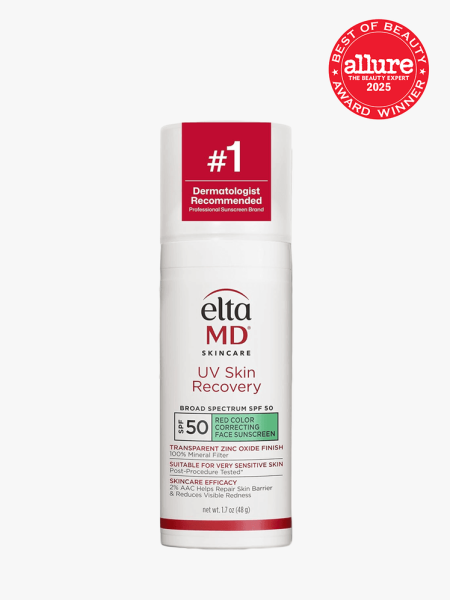
    Netflix/Geoffrey ShortCathy plays the innocent

    East of Eden follows Cathy through the many chapters of her life, so it was important for her hair to reflect those changing realities, says McIntosh. “I needed to figure out her starting point and her end point and then fill the space in between to work out how we get from A to B,” she says, adding that she was “very aware of the passage of time” when designing the styles that Pugh would wear over the more than 40-year timeline.

    Pugh wore three wigs in the series, all created by wigmaker Samuel James. She wears the first while Cathy is in Boston with Mr. Edwards (a brothel owner she becomes romantically involved with), while on the Trask farm (where she shows up after being beaten by Mr. Edwards), and on the ranch in Salinas Valley, California (where she moves with Adam Trask, whom she marries and has twins with).

    Wig number one is lighter, offering a natural development from Cathy’s adolescent blonde to a very realistic adult hue her hair would have naturally grown into, explains McIntosh. “We wanted the color to be a darker blonde than it was when she was a child, but still look incredibly natural with lighter ends, as if they were sun-kissed.”

    Florence Pugh as Cathy Ames with her broken arm in a sling and Mike Faist as Charles Trask in episode 102 of East of...

    Cathy arrives at the Trask farm with her arm in a sling, so her hair needed to be simply styled.

    Netflix/Geoffrey Short

    Leaving Cathy’s hair down during this period was intentional for a number of reasons. It made logical sense: When she arrives on the Trask Farm, she is healing from her injuries, including a broken wrist. “We figured the most she would be able to physically do herself is brush it, so we left it out and natural,” McIntosh explains. “As she begins to heal, we started pulling it back softly into a half-up style, but we kept it very practical, effortless, and soft.”

    The entire hair team were also all big fans of fluff, wisps, and flyaways at this point in filming. The whimsical additions to Cathy’s hair play into the character's healing state. They also give Cathy a softness that helps her present herself to Adam as vulnerable in order to gain his trust and eventually become his wife.

    Cathy’s hair accessories are also important clues to her character’s psyche and societal position: “When we see Cathy in Boston, she is young; she is presenting with beauty and innocence. We chose key moments to have an Alice in Wonderland-inspired blue ribbon in her hair,” McIntosh adds.

    While on the farm, Cathy is wearing hand-me-down clothing from Mrs. Trask, and still a version of her innocent, helpless self. “I was using small pieces of fabric ripped into ribbons to tie her hair back,” says McIntosh. “I also created one of those out of the bloodied dress she [was wearing when she] arrived at the home. Just a bit of a secret for Florence and me that no one would notice unless pointed out.”

    Florence Pugh as Cathy Ames in episode 103 of East of Eden sitting on the front porch in a wicker chair.

    Cathy’s flushed cheeks comes courtesy of Westman Atelier’s Baby Cheeks Blush Stick in Petal.

    NetflixThe guise of a youthful flush

    In those early episodes, Cathy’s makeup had to mirror her hair’s equally nonthreatening appearance, so a fresh, skin-first look was important. “For her younger look, I sheered out the [Westman Atelier] stick foundation with Beau Domaine The Cream to add a wash of color,” says Thorisdottir. But what really sells Cathy’s faux-naïf act is her flushed cheeks and rosy lips, courtesy of Westman Atelier’s Baby Cheeks Blush Stick in Petal and HydroBalm Tinted Lipstick in English Rose. Thorisdottir has since used English Rose on at least one actor on every job since East of Eden. “It is the perfect nude [for this skin tone].”

    Pugh was also integral in shaping Cathy’s beauty looks. “Florence is very authentic in her approach to her acting, which sets the tone for my work,” says Thorisdottir. “She is just as comfortable in front of the camera with or without makeup on as long as it is right for the scene.” Along with always giving the makeup artist the freedom to create before the two discuss details of her character's looks. “If it makes sense, she is game.”

    East of Eden. Florence Pugh as Cathy Ames in episode 104 of East of Eden. Cr. Geoffrey ShortNetflix © 2026

    McIntosh and Pugh nicknamed this hairstyle her “kitten ears.”

    Netflix/Geoffrey ShortKate’s dark side eclipses Cathy

    Adam offers Cathy shelter and protection when she most needs it, but after giving birth to two boys, she feels her agency slipping away, tied down and forced to play the role of wife and mother. In a brutal attempt to reclaim her narrative, Cathy shoots Adam and abandons her sons, running away to a brothel in Salinas proper in hopes of reclaiming her prior profession as a sex worker for financial independence.

    The brothel owner Faye (Martha Plimpton), takes Cathy in. “It’s not until we see Cathy at Faye’s that we see the first big change [in her hair],” says McIntosh. “When she meets Faye, she wears her signature blue ribbon, presenting herself as she did to Mr. Edwards. Then we slowly start to see her morph into Kate.”

    Florence Pugh's wig for East of Eden on a mannequin head.

    Cathy’s first, lighter wig.

    Jaime Leigh McIntoshTwo bundles of hair used for Florence Pugh's two wigs on the table next to each other.

    McIntosh dyed the second wig slightly darker than the first.

    Jaime Leigh McIntoshEast of Eden. Florence Pugh as Cathy Ames in episode 104 of East of Eden. Cr. Geoffrey ShortNetflix © 2026

    Pugh wearing Cathy’s second wig.

    Netflix/Geoffrey Short

    A detail taken from the book helped determine what Cathy’s second wig would look like. After recognizing her from her portrait that hangs in Adam and her sons’ homes, the town sheriff and Cathy reach an agreement: She’ll create a new identity for herself, and the sheriff will honor her secret if she leaves her old family behind, unharmed. “Once the sheriff tells her to color her hair darker, she is presenting to the world as Kate and not Cathy anymore,” McIntosh explains. “This second wig was made identical to the first, but then I dyed it. I didn’t want it to be made with darker, naturally brown hair. I wanted to color it like Kate would have [in order] to have more control over the final result.”

    Once settled in and working at Faye's brothel, we see Kate playing with different hairstyles and shapes. “I did a style one morning, which featured two peaks at the top of her head, that Florence was very drawn to,” McIntosh explains. “We ended up nicknaming [the look] ‘kitten ears,’ and throughout the rest of the series you see [the ears] continue and grow with Kate.”

    Florence Pugh as Cathy Ames in episode 106 of East of Eden  wearing a black hat black sunglasses red lipstick and a...

    Kate’s statement red lip is a combination of shades from MAC and Le Rouge Français.

    NetflixMadame Kate becomes queen of her arena

    By the time Kate becomes the owner of the brothel, time has again passed, and her final wig is closer to her natural hair color. Given that she spends less time in the daylight, this wig is darker and includes visible grays running through it. “Because she is running the brothel and not working [in it], she is presenting with intricate styles,” says McIntosh. “I am also keeping in mind where in the world this is taking place. She is not in Paris, London, or New York, so I never went too elaborate or perfect.”

    As Kate blossoms into her most powerful self, “Florence beamed with delight at the idea of Kate wearing tiara-type hair accessories—for Kate to be queen of her arena, and to be in full control of her world,” McIntosh says. Along with costume designer Kirsty Cameron, McIntosh sourced a number of hairpins, crowns, and accessories, including some handmade by a local New Zealand artist, Daughters of July.

    A photo of a gold and pearl tiara worn by Florence Pugh in Netflix's East of Eden.

    One of the crowns sourced for Kate.

    Jaime Leigh McIntoshA photo of a black grown worn by Florence Pugh in Netflix's East of Eden.

    Another tiara-like accessory sourced for Kate.

    Jaime Leigh McIntosh

    As Cathy transitions into Madame Kate and embraces her newfound power and wealth, Thorisdottir imagined Kate would also be dabbling in the newly purchasable makeup of the early 1900s. “While makeup products might not have been readily available in Salinas, her clients would have likely traveled and traded, so she could have cosmetics before anyone else in that town.” Thorisdottir made her own cosmetics discovery while filming, a fact that impacted what she used on set. “I got introduced to Westman Atelier while I was in New Zealand, and I just loved it,” she says. “[Gucci Westman’s] foundations were the perfect fit for almost all the looks for Cathy from young to old.”
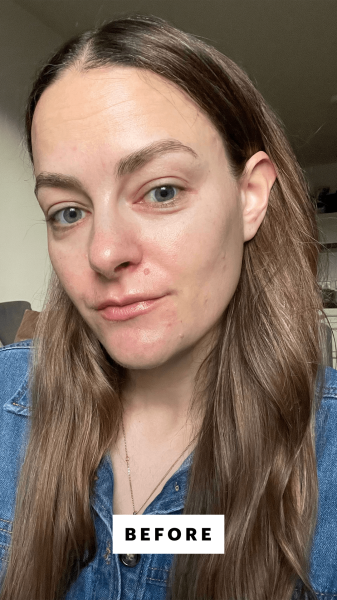
    Florence Pugh as Cathy Ames in episode 105 of East of Eden dressed in a tiara heavy makeup and loads of jewelry.

    Pugh was thrilled at the idea of Kate wearing tiaras to show she was in full control of her world, says McIntosh.

    Netflix

    In episode six, “The Great Try,” we see Kate in the boldest red lipstick she wears in the show—a far cry from the innocent Cathy from past episodes and one of Thorisdottir’s favorites. “For the red lips, I mixed Le Rouge Français 010 and MAC Russian Red, a shade that’s been in my kit since I did Inglourious Basterds,” she says.

    In the final episode, “Timshel,” Kate’s empire is falling apart, and her hair follows suit. “In her final hours, we wanted Kate [to look] a little unraveled,” says McIntosh. “We also wanted to keep those kitten ears, essentially keeping a crown of sorts on her head, but made of hair. The half-up style also mirrors the little Cathy we see her come face-to-face with at the very end.”
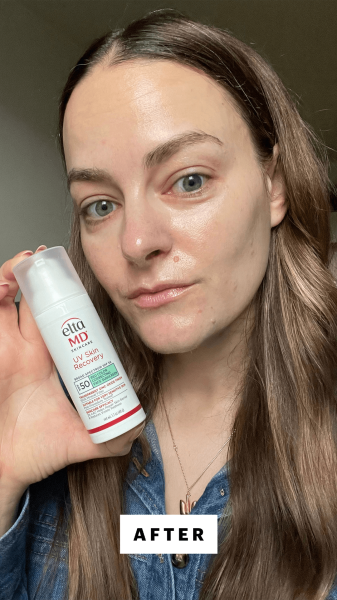
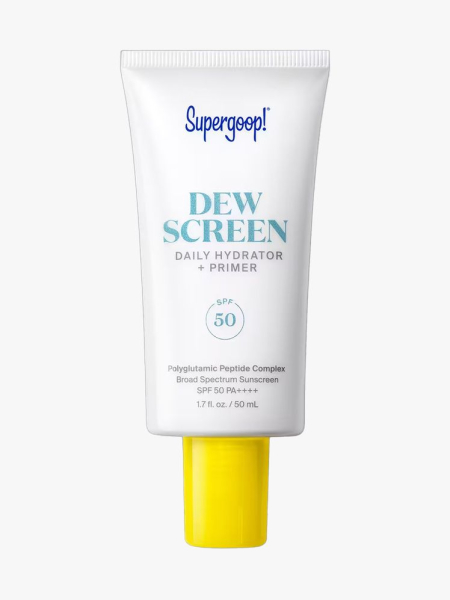
    Florence Pugh as Cathy Ames in episode 107 of East of Eden sitting with her hair down and tears in her eyes.

    In the final episode, Thorisdottir wanted “the makeup to break down and move with [Pugh]."

    Netflix / Kirsty Griffin

    Unlike many other productions, where the goal of the makeup is to have it hold up on set through long hours and weather, Thorisdottir wanted “the makeup to break down and move with her.” Thorisdottir explains that she secretly loved Cathy’s look at the end of the series when, decked out in all her jewelry, she hugs her younger self. “She has yet another breathtaking costume on, her hair is long and messy with the ‘kitten ears' styling, and her makeup is all broken down. That scene is so epic. I was in awe watching it all happen in front of me.”

  • Inside Alexander Skarsgård’s Wicker Transformation, From Flax Lashes to His Basketweave Bulge

    Inside Alexander Skarsgård’s Wicker Transformation, From Flax Lashes to His Basketweave Bulge

    Two stills from the movie Wicker the first showing Alexander Skarsgard having his hair touched up the second shows him...Black BearSave StorySave this storySave StorySave this story

    Believe the hype: Wicker is the wittiest, smartest, most romantic movie of the year. It’s also the horniest, and should we be surprised? The basketweaving lexicon is full of words like “tucking,” “waling”, and “rim,” with willow rods described as “featuring a thick butt end and a thin tip.” That’s crafty…and hot.

    The premise of the film is simple: In a medieval English village by the sea, a lonely fisherwoman (Olivia Colman) bucks the convention of marriage by contracting the local basketmaker (Peter Dinklage) to weave her a husband made of wicker (Alexander Skarsgård), sending the townspeople who once tormented her into a frenzy when they learn of his passionate and unwavering affection for her.

    Even just the two-and-a-half-minute trailer, released on July 30, had people hot and bothered. Netizens proclaimed their affection for the rattan man, claiming a combination of intrigue, longing, and confusion. “I am 100% going to see the “Wicker” film because I never thought anyone would ever write a screenplay exploring the deeply impure feelings they experienced while walking into a Pier One Imports,” one Threads user wrote. “Women don’t want romcoms, they want to watch a menopausal woman get railed by a wicker basket,” joked another. You can purchase “Worth the Splinters” and “Wicker Dicker” T-shirts on Etsy, while over on TikTok, fans are plotting to steal the life-size cardboard displays of a woven Skarsgård from movie theaters to be able to stare at the sexy sentient basket anytime they like.

    The thirstiness—and with it the buzz—surrounding this movie works because Wicker Husband is hot. Would we be drooling over him if he looked more like a laundry basket from Home Goods than a hot dude from Sweden? The audience needs to find him desirable, but they also need to believe he’s woven from reeds. Casting Skarsgård was crucial in making Wicker Husband yearnable, but so was the art of special-effects makeup. One of the biggest questions around this film is how they transformed Skarsgård into Wicker Husband. Was it prosthetics? AI? A spandex suit? We spoke to the team behind the cosmetic cinematic feat to find out.

    alexander Skarskgard on set as the Wicker Husband having his fiber wig touched up by makeup designer Sarah Rubano.

    Skarsgard on set with lead FX makeup designer, Sarah Rubano.

    Black Bear / Kristof Galgoczi NemethBringing on a real basketweaver

    To bring the Wicker Husband to life, filmmakers Alex Houston Fischer and Eleanor Wilson brought on New Zealand-based design and visual effects studio Wētā Workshop led by prosthetic makeup designer Joe Dunckley and lead makeup-effects artist Sarah Rubano.

    The research and design process for the makeup was allotted 18 months prior to principal photography, so Dunckley had the opportunity to get the execution down to a science. The process started with 2D concept art, mapping out the shapes the team needed to build Wicker Husband. Then they enlisted an actual weaver and textile artist, Jasmin Van Lith, to create samples of realistic weave patterns for the areas needed (Van Lith also assisted in hand-crafting physical garments for the Avatar franchise).

    The tricky part was making sure Skarsgård could still emote while wearing the prosthetics. To do this, they used 3D animation software to measure precisely how much movement was needed, ensuring Skarsgård had ample facial expressions. For example, “If you're smiling, the corners of your mouth need to lift 20 millimeters, and we need to allow for that much movement in the weave pattern,” Dunckley explains. “We could take that information [to Van Lith], and she would give us a physical weaving sample that would conform to that amount of movement in that direction.”

    Alexander Skarsgard stands on the set of Wicker in his woven prosthetics having his makeup adjusted by lead makeup...

    Wicker Husband’s eyes were the trickiest feature to get right, according to lead makeup-effects artist Sarah Rubano.

    Black Bear

    From there, Dunckley and Rubano took the weave samples to Wētā sculptors, who would re-create the weave digitally on a scan of Skarsgård’s face and body. Those “appliances” (the wearable pieces) were then printed out, and physical tests of them would be conducted until they landed on the perfect specifications for each piece. “It was an extraordinary development phase and something that we're really proud of because we think they could be the very first 3D-printed prosthetic appliances,” Dunckley says. “[There have been] sculpted prosthetics in 3D before, and you can mold prosthetics in 3D, but we're directly printing the prosthetic appliances that we applied on Wicker.”

    In total, they ended up with 10 facial appliances and 50 interlocking body pieces stitched onto power mesh or spandex for Skarsgård to put on, a process that Dunckley and Rubano got down to 90 minutes while filming. When it came to his face, he had ears, lips, and under lips, eye bags, and a piece Rubano referred to as a “Batman mask,” which covered the forehead, nose, and cheekbones.

    Additionally, there was a jaw piece and the wig, which was made out of muka, a fiber produced from New Zealand flax. “Those [muka] strands were knotted onto the weave just like you would a human hair wig, knotting onto the lace,” says Rubano.

    Olivia Colman and Alexander Skarsgard being filmed for their film Wicker. Skarsgard is covered in woven prosthetics.

    Skarsgård’s wig was made from muka, a fiber made from New Zealand flax and a key material in Māori traditional textiles.

    Black BearMaking Wicker Husband hot was all in the details

    Hotness was the team’s North Star when it came to Wicker Husband, but how much of it was just Skarsgård being…Skarsgård? “He needed to be the object of desire,” says Dunckley. “He needed to be the hot basket. But Alexander himself was the key inspiration for the design.”

    That meant making sure the actor was recognizable through the makeup so that his expressive qualities came through onscreen—so that you could sense his calm, confident demeanor and his intent listening skills. “We called his look the ‘Skarsgård Smolder,’” says Dunckley. “It was very intentional to get his likeness into the weave, and there were multiple iterations of sculpts to get there.”

    Rubano took steps to ensure Wicker Husband’s face featured “handsome-man” qualities. This included making his cheekbones higher and more defined by adding extra material, creating a strong jawline, and knotting his eyebrows to create a more “robust” shape. His wig was longer when they first started testing it, but they ultimately landed on a refined, swept-back style with a “Harlequin romance” type of vibe. Basically, if you saw him on the cover of a romance novel, you’d buy it.

    Three closeup images of muka fibers bundled hanging and sewn into beards to be used for Alexander Skarsgard's costume in...

    Muka fibers, made from the New Zealand flax plant, were used to make Wicker Husband’s hair, beard, and lashes.

    Wētā WorkshopWicker Husband's lashes helped give him a more human quality.

    Wicker Husband’s lashes helped give him a more human quality.

    Wētā Workshop

    One element that really sold the fantasy were his eyelashes, also made of muka fiber. Rubano says that they only did his makeup test and “assembled” Skarsgård the Friday before the Monday filming date, and they needed the “robust” lashes to make it all work.

    “The eyes were the trickiest,” says Rubano. “We got a little help from visual effects to remove some of the pink out of the tear ducts and a little bit of pink on the eyeball and on the waterline, but [the lashes] pulled us away from ‘human’ into this lovely, beautiful wicker creation.”

    Dunckley shared that they almost went with sclera lenses (contact lenses that cover a majority of the eye) painted with a basketweave print to make Skarsgård completely unrecognizable. And if you’ve seen the film, you know those didn’t make the cut. “When we tested them, we were like, ‘He's gone, he's no longer the romantic lead. He's too alien,’” Dunckley says. Without them, Skarsgård felt more accessible. “The window to the soul was there.”

    Alexander Skarsgard as Wicker Husband and Olivia Colman as Fisherwoman on the set of their film Wicker about to dance.

    When designing his facial prosthetics, Rubano enhanced the cheekbones and jawline to give Wicker Husband a “handsome quality.”

    Black BearSkarsgård’s wicker bits almost weren’t

    One of the most talked-about moments of the film is the 10-second, blink-and-you’ll-miss-it scene of Wicker Husband wading naked in the river. And yes, the bulge matches the basketweave.

    While we were prepared to get intel on the decisions behind the size and shape of the “wicker ween” prosthetic, Dunckley admits that he can’t take credit; costume designers Tóth András Dániel and Godena-Juhász Attila were responsible for the woven willy. “Our build focused on the hips up,” Dunckley explains, “and that shot came a little later.

    When it was decided to do the wide river shot, András and Attila helped out, “so it’s actually a costume fabrication build,” explains Dunckley. The penis is padded to look like the same shapes that are already throughout the body, and the weave of it is a “puff paint-type finish” which was printed on spandex, with the coloring matching the prosthetics so the final look was cohesive.

    Other much-talked-about body parts from the film are Skarsgård’s wicker nipples (which he gifted British talk show host Graham Norton when appearing on his show for the film's press run). But there was a point in the design process where these itty-bitty body parts got discarded. "There was a lot of debate during our design phase as to whether or not he should have nipples,” says Dunckley.

    “People seemed to have strong feelings one way or the other. Why would a sentient wicker being have nipples? On the other hand, why not?!” Dunckley adds. “Now, seeing all the attention that the wicker nipples are getting out there in the world, it's a good thing we did!” Built separately, the fiber nips were made using traditional hat-making techniques and then woven onto the suit as a final step.

    Makeupeffects artist Sarah Rubano touches up Alexander Skarsgard's Wicker Husband prosthetics on set of the movie Wicker.

    Skarsgård and Rubano on set.
    Black BearAlexander Skarsgård really is yearnable

    Skarsgård was a dream to work with, according to Rubano, and a total team player—resilient and zen in the makeup chair with a great sense of humor.

    “He sat so quietly, like a statue, and then he'd come to life when it was time [to go to set],” Rubano adds. “Joe and I looked after him over the course of the day, and he looked after us because he was so respectful in the makeup. He made sure that he was looking after it, so it endured the course of a long shoot day.”

    Rubano notes that to help bring some comfort to filming, they would peel off the lips and eyelashes so he could eat in peace, and they made him a beard bib to keep it clean. “He was just wonderful to work with. We were very lucky.”